
We’ve launched AI training at GP — becoming the ones who use it.
Hello! This is Yoshimura from GP.
There were many things that surprised me when I joined GP, but one of them was that all employees were already subscribed to ChatGPT’s paid plan. It made me realize that having access to AI is simply a given in this company.
More recently, dedicated AI monitors have been introduced for all employees, and the company as a whole is placing even greater emphasis on AI utilization. As a new initiative, we also partnered with Outbahn to conduct a six-session AI training program!
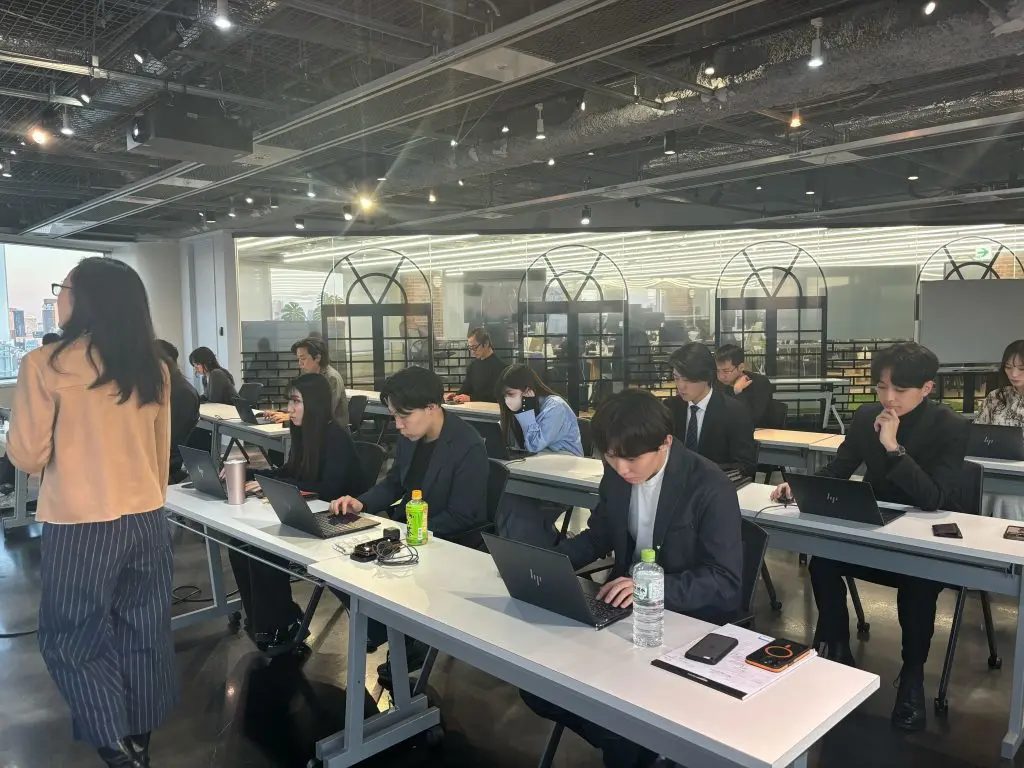
Session 1 | Before AI, Understand Our Own Work
The first session didn’t start with tools—it started with writing out our daily schedules and tasks.
We identified which tasks take the most time and effort, and explored where AI could potentially be applied.
Some employees found it surprising: “Why are we reviewing our work in an AI training?”
But the goal wasn’t simply to become knowledgeable about AI—it was to ensure that we could actually use it in real work after the training.
That’s why the program began with a “field-level” review of our day-to-day operations.
Session 2 | Researching Use Cases and Exploring Solutions
In the second session, we focused on tasks identified in the first session where GPTs could be applied.
Using Perplexity, we researched how other companies are utilizing AI—what kinds of tasks they apply it to, and how they integrate it into their workflows.
Based on this, we redesigned our workflows with GPTs in mind, clearly separating what should be handled by humans and what can be delegated to AI. This helped us build a practical vision of implementation.
Session 3 | With ChatGPT, “How You Ask” Matters
The third session focused on prompt design.
Even with the same tool, the output can vary significantly depending on how you ask.
For example, by including a prompt like “Please think step by step,” ChatGPT outputs not only the final answer but also the logical intermediate steps. This helps the AI verify assumptions along the way rather than rushing to a conclusion, reducing hallucinations.
While the first two sessions focused on “where to use AI,” this session was about “how to use it effectively and consistently.”
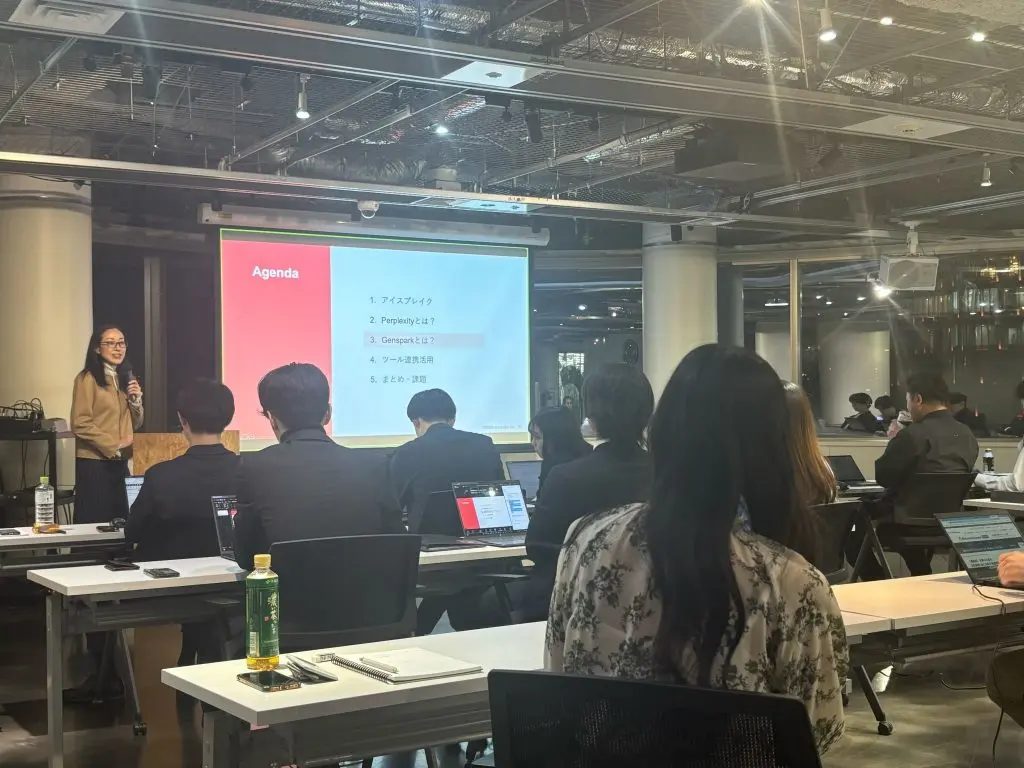
Session 4 | Research, Synthesize, and Create Materials
In the fourth session, we experienced the full workflow—from research to document creation.
We used Perplexity for research and Genspark for output.
Perplexity is particularly strong in providing up-to-date information. It’s highly useful when researching recent trends or case studies, and the ability to verify sources makes it reliable for business use.
Using the gathered information, we then created draft materials with Genspark. This significantly reduced the burden of structuring content from scratch and allowed us to seamlessly connect research to output.
Session 5 | Building GPTs Tailored to Our Work
In the fifth session, we created our own GPTs based on the workflows we had refined.
We considered what roles each GPT should play and how to design instructions that would make them practical for real-world use.
Assuming actual operation, we repeatedly adjusted prompts, refined output detail and tone, and tested whether they were truly usable in our daily work.
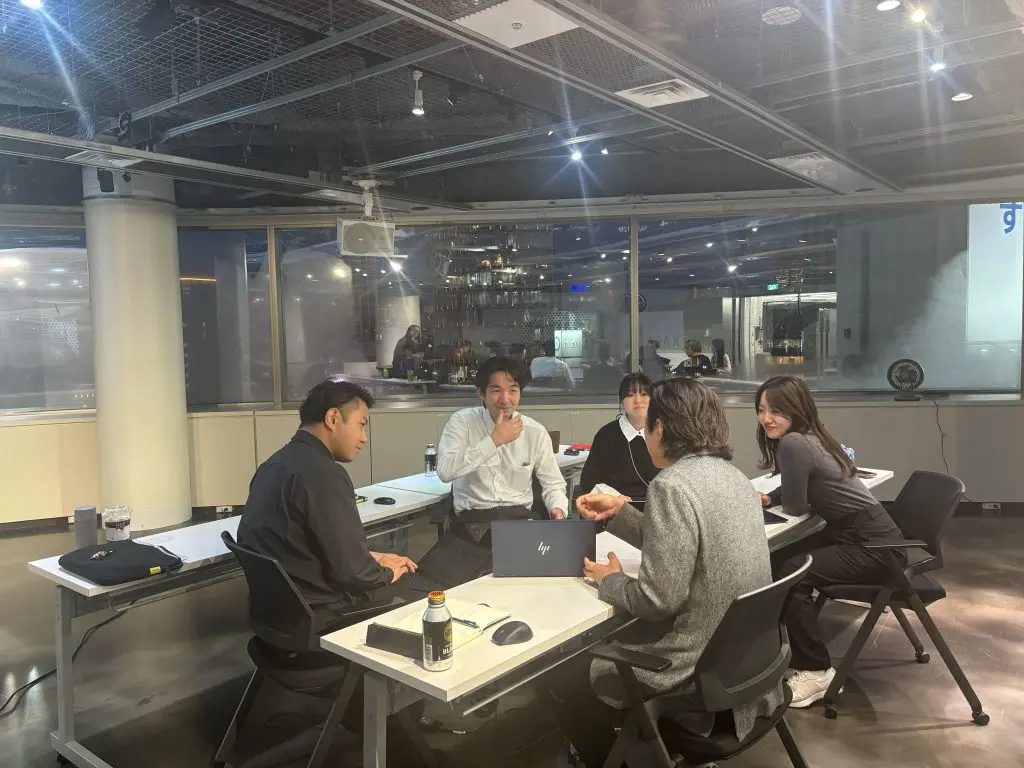
Session 6 | Presentations
The final session was a presentation where each participant shared their GPTs and how they use them.
Even when using similar GPTs, the applications varied widely.
Some supported daily tasks such as meeting minutes and email editing, while others were applied to event production—such as structuring proposals or generating concept drafts.
Seeing how the role of GPTs shifts depending on the nature of the task really highlighted the breadth of AI’s potential.
Conclusion | Remaining on the “User” Side
What stood out most from this training was that AI is ultimately just a tool—and its effectiveness depends heavily on the skills and knowledge of the user.
While AI holds tremendous potential, it cannot be fully leveraged without the ability to decide how and where to use it.
That’s why, alongside AI, we as users must continue to grow and evolve.
This training was not the goal—it was just the beginning.
Moving forward, we will continue experimenting in our daily work and refining GP’s unique approach to using AI.

SUPERVISED BY

A collective of event production professionals handling the planning, production, and management of over 250 events annually.
From internal gatherings like shareholders' meetings, anniversaries, and award ceremonies to external PR events and exhibitions, we design and deliver optimal communication solutions. Whether in-person, online, or hybrid, we give form to the messages companies wish to convey.