

What Is an Award Ceremony? How to Create an Award Event That Elevates Brand Value

An award ceremony is not merely an event where certificates or trophies are handed out.
Who you choose to spotlight—and how—clearly communicates a brand’s values, stance, and message to society, making it a powerful strategic tool. In this article, we clearly explain the fundamentals of award ceremonies, from the differences between award ceremonies and commendation ceremonies to planning, judging, and production.
What Is an Award Ceremony?
Basic Definition and the Difference from “Commendation Ceremonies”
An award ceremony is a formal event or ceremony held to honor individuals or organizations that have achieved outstanding results in a specific field, presenting them with certificates, trophies, or similar honors. As the term implies, the focus is on granting an award.
Related terms such as “award reception,” “commendation ceremony,” and “awards” are often used interchangeably, but there are important distinctions.
The Difference Between an “Award Ceremony” and an “Award Reception”
Both are pronounced the same in Japanese and are often confused, but the key difference lies in perspective.
An award ceremony emphasizes the organizer’s viewpoint—granting the award and communicating its philosophy and values.
An award reception focuses on the recipient—the act of receiving the award.
Generally, prestigious honors such as the Nobel Prize use the term award ceremony.
The Difference Between an “Award Ceremony” and a “Commendation Ceremony”
The main difference lies in who is being recognized.
An award ceremony honors a select few recipients chosen through a screening or judging process—for example, “MVP Awards” or “Best Sales Awards” at internal company events.
A commendation ceremony, on the other hand, does not necessarily involve competition or ranking. Long-term contributions, years of service, or team achievements may also be recognized.
Why Hold an Award Ceremony? Benefits for the Organizer
Among various commendation events and awards, hosting a formal award ceremony offers the following advantages:
Communicating Your Philosophy and Vision to Society
Because award ceremonies are often associated with prestigious honors, they serve as powerful platforms for conveying the organizer’s philosophy and vision.
Building a Community by Visualizing Award-Winning Activities
By publicly sharing the reasons for selection and the recipients’ initiatives, it becomes clear what is being valued.
This not only fosters empathy and motivation among others but also encourages information exchange and the formation of a highly motivated community.
Establishing Industry Positioning
Hosting an award ceremony places the organizer “in the judge’s seat,” signaling a level of expertise sufficient to evaluate others.
By shining a spotlight on award recipients, attention naturally turns to the organizer as well—allowing industry positioning to grow as the award gains recognition.
Types of Award Ceremonies and Typical Use Cases
Below are some representative types of award ceremonies.
Industry Awards
Awards targeting a specific industry, such as business contests or startup awards.
They attract high industry attention and are well suited for branding and marketing purposes.
Social Issues / SDGs Awards
Awards focused on social issues or the SDGs that align with a company’s business.
They offer broader appeal than industry awards, but require a clearly articulated philosophy and purpose—why this award exists.
Student and Creator Competitions
Awards that place even greater emphasis on individuals than industry awards.
In many cases, recruitment is also an important consideration.
Differentiation from Internal Awards
Award ceremonies are often aimed at external audiences, while internal awards are designed for employees.
They differ fundamentally in purpose and audience—essentially, who the event is for.
Basic Structure and Sample Program of an Award Ceremony
Award ceremonies typically follow a standard flow.
Overall Flow of an Award Ceremony
Opening
First impressions matter. Videos, background music, and opening remarks set the tone and communicate the ceremony’s significance.
Introduction of Guests and Judges
Introducing judges, dignitaries, and special guests is a key branding element—who selects the winners matters.
Explanation of the Award Concept and Judging Process
Clarify the award’s purpose, evaluation criteria, and award categories to emphasize meaning and fairness.
Nominee Introductions
Award ceremonies are not only about winners. Introducing nominees and their initiatives highlights the value of recognition itself.
Winner Announcement and Award Presentation
The biggest highlight of the ceremony. Creating a powerful, emotional moment here showcases the organizer’s production expertise.
Acceptance Speeches
Speeches of gratitude and future aspirations add depth and meaning from the recipient’s perspective.
Commemorative Photos and Networking
Photo sessions and networking help strengthen connections among participants. This may be included in the ceremony or held separately.
Closing Remarks
The organizer summarizes the event and shares future outlooks before officially closing the ceremony.
Content That Enhances an Award Ceremony
Because the award presentation is the central highlight, content should reinforce the value and meaning of the award rather than focusing solely on entertainment.
Nominee Feature Videos
Highlighting the journey leading to the award enhances both the ceremony’s significance and the award’s credibility.
Acceptance Speeches
While nominee features are organizer-driven, acceptance speeches are voiced by recipients themselves—an essential factor that elevates the ceremony’s prestige.
Talk Sessions
Panel discussions with judges help communicate social significance and further enhance the award’s value.
Planning an Award Ceremony: Starting with Award Design
STEP 1: Define the Award Theme and Ideal Recipient
Clarify what the award represents and who you want to honor.
Aligning branding, social impact, and promotional goals ensures coherence and credibility.
STEP 2: Design the Application, Nomination, and Judging System
Once the concept is set, plan outreach, participation methods, and evaluation criteria.
If public recognition is a goal, consider how to involve a wide audience.
STEP 3: Engaging Judges and Partners
Judges are essential to an award’s credibility.
Consider who best supports the award’s purpose and what value participation offers them.
STEP 4: Decide the Format (In-Person / Online / Hybrid)
The format depends on scale, budget, and target audience.
Online formats suit wide outreach, while in-person ceremonies work well for focused industries. Hybrid formats require careful balance.
Tips for Production and Venue Design
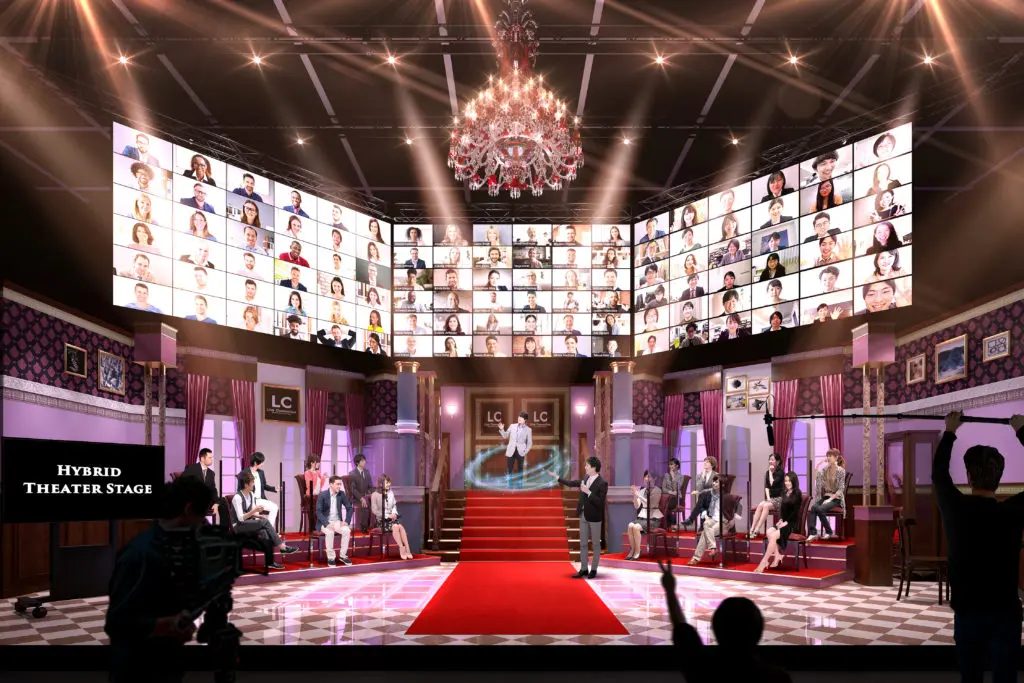
Creating a Sense of Occasion with Red Carpets or Runways
A classic yet effective way to naturally heighten excitement for both recipients and attendees.
Maximizing the “Award Moment” with Lighting, Sound, and Visuals
The announcement moment is the emotional peak—ensure the recipient is the clear focal point.
Camera Work and Screen Design for Online Viewers
For online or hybrid events, thoughtful visuals and camera work are essential to convey excitement and meaning beyond simple broadcasting.
Sustainability-Conscious Design
As award ceremonies often address social values, sustainable design and environmental consideration are increasingly prioritized.
Inclusive Event Design
To ensure accessibility regardless of age, gender, disability, or language, inclusive planning is vital—barrier-free access, subtitles, sign language, and more.
GLOBAL PRODUCE Award Ceremony Case Studies
KOSÉ Co., Ltd.: A Natural “Path of Honor” with Floral Design and Banquet-Style Seating
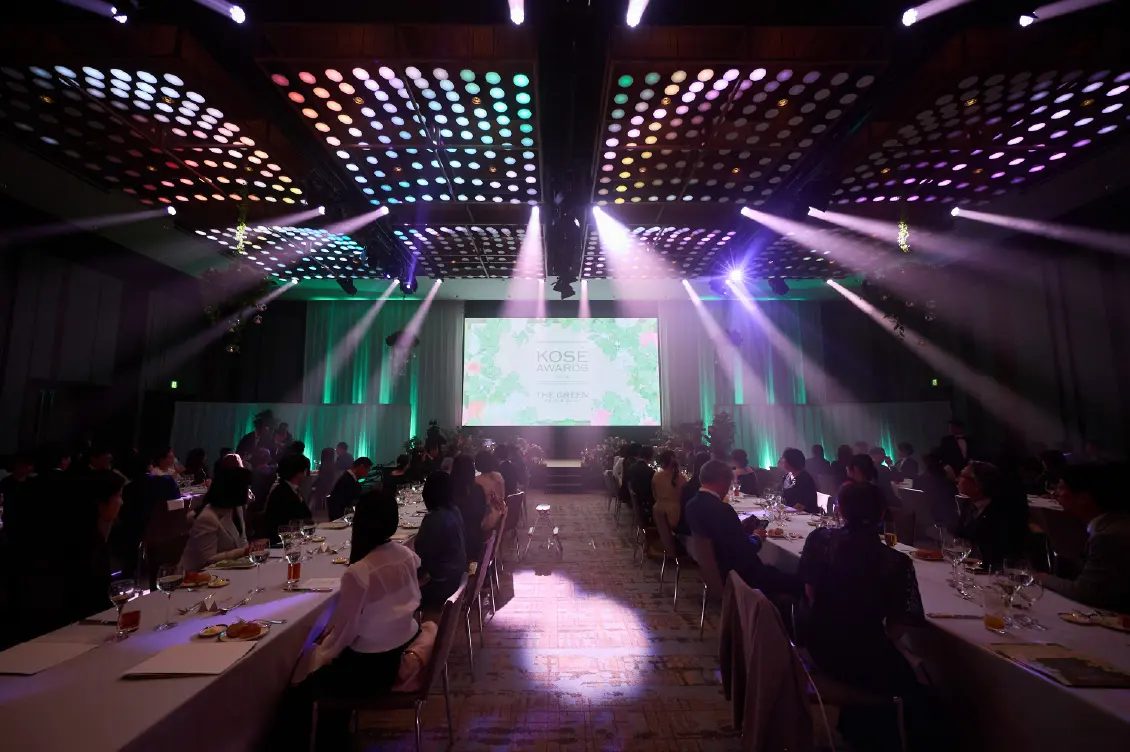
KOSÉ Awards 2025 honored employees’ efforts and challenges.
A banquet-style layout directed attention naturally to recipients, complemented by abundant floral stage design for a refined yet welcoming atmosphere.
PR TIMES, Inc.: An Inclusive Award Ceremony That Leaves No One Behind
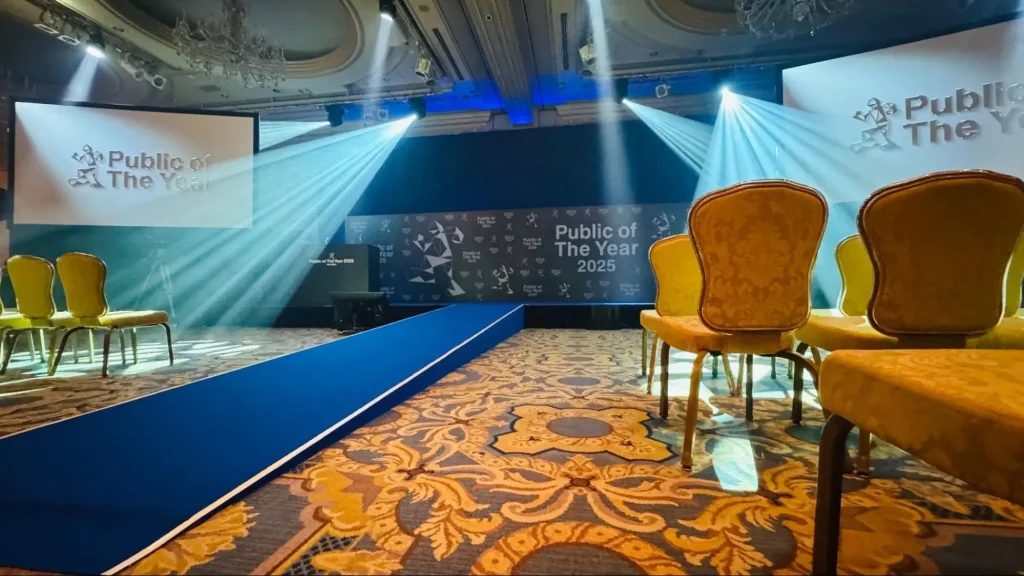
Public of The Year 2025 honored individuals who moved and connected society.
To ensure all recipients could take the stage independently, a barrier-free runway slope compliant with accessibility standards was installed.
Canon System & Support Inc.: A Hybrid Award Ceremony Accessible from Anywhere
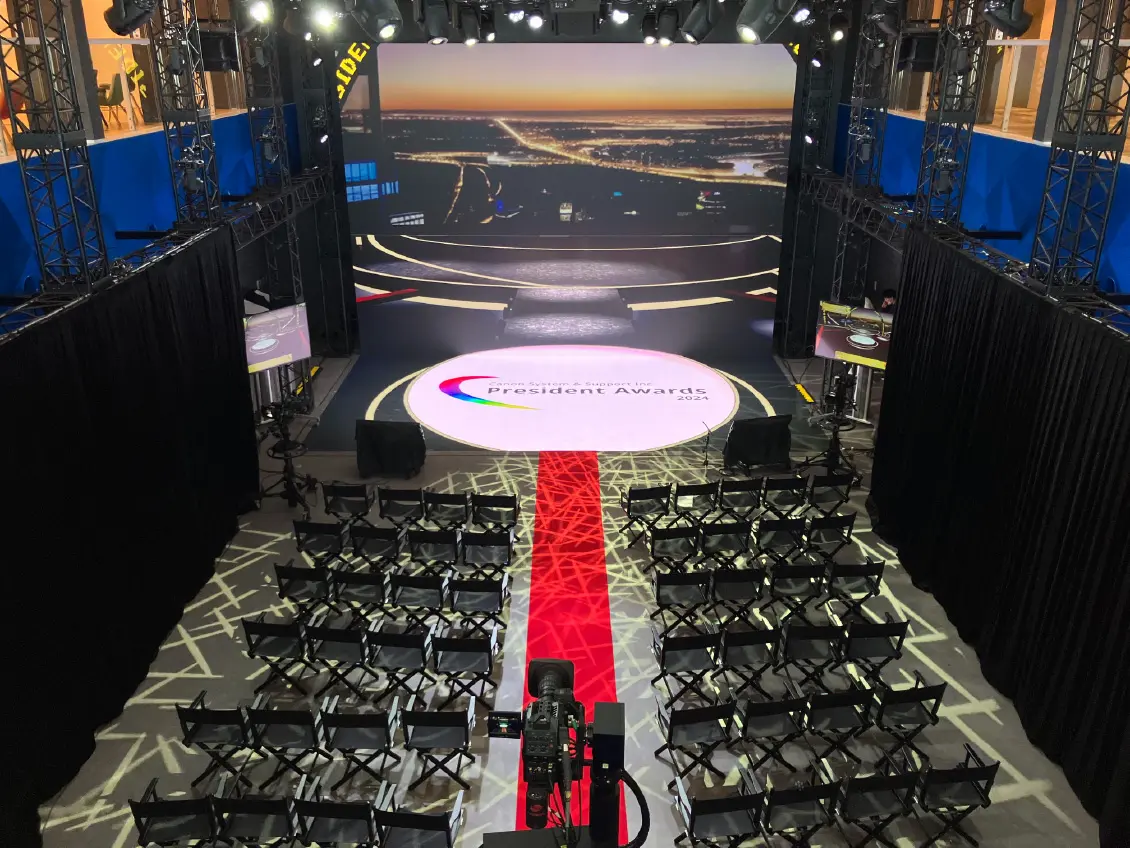
The President Awards aimed to create a space where recipients are celebrated by colleagues—delivering immersive experiences for both on-site and online participants.
B-first Inc.: Enhancing Brand Value and Staff Pride
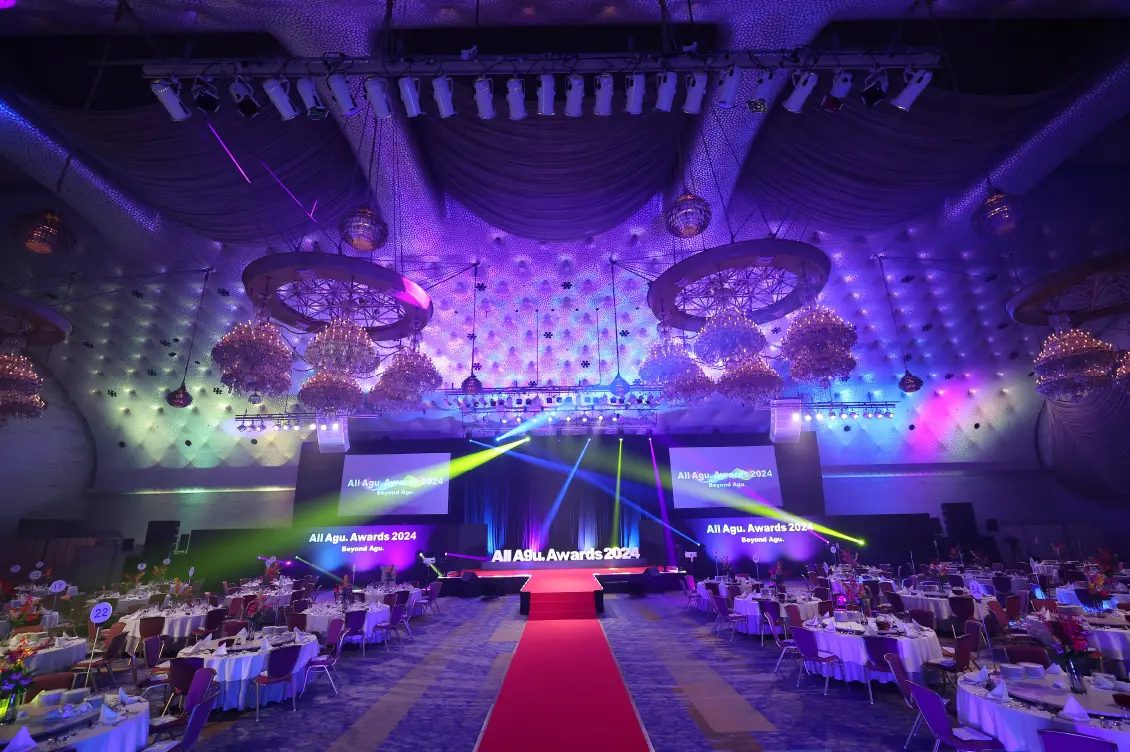
All Agu. Awards 2024 combined a milestone celebration with an award ceremony, emphasizing dynamic staging and high-quality lighting tailored to the professional beauty industry.
Frequently Asked Questions (Q&A)
Which should I choose: an award ceremony or a commendation ceremony?
Award ceremonies emphasize competition and spotlight a small number of stars. Commendation ceremonies are better suited for broadly recognizing contributions and fostering unity.
How can fairness and transparency in judging be ensured?
Clearly define and share rules, involve multiple judges (including external experts), and explain selection reasons publicly.
What is the typical budget for an award ceremony?
Costs vary widely depending on scale and content. Compared to internal events, external awards require larger budgets—often starting from several million yen. We can propose plans aligned with your budget.
How far in advance should preparations begin?
Including nominations and judging, planning may require over a year. The ceremony itself typically needs 3–6 months of preparation.
How can we ensure the award doesn’t end with the ceremony?
Think of the ceremony as a starting point. Promote recipients’ activities, host follow-up sessions, and continue building the award’s value over time.
Summary
Though similar in appearance, award ceremonies and commendation ceremonies differ in purpose and impact.
By clearly defining who to honor and what message to deliver, and aligning award design with production, an award ceremony becomes a powerful branding strategy.
Designing a prestigious award and producing a moving ceremony is not easy to accomplish internally alone.
At GLOBAL PRODUCE, we provide total production—from award concept design to stage direction that instills pride in recipients, and hybrid streaming solutions—to bring your vision to life.
Even if your idea is still in its early stages, feel free to share your vision with us.

SUPERVISED BY

A collective of event production professionals handling the planning, production, and management of over 250 events annually.
From internal gatherings like shareholders' meetings, anniversaries, and award ceremonies to external PR events and exhibitions, we design and deliver optimal communication solutions. Whether in-person, online, or hybrid, we give form to the messages companies wish to convey.