
An Event Is Not a “Point,” but a Process — Designing Events That Drive Corporate Transformation
Hello, this is Kawamoto from GLOBAL PRODUCE.
In this article, I’d like to share a perspective shaped by real on-site experience: how to design events not as one-off successes, but as “ongoing engagement”—a continuous process that supports organizational growth and corporate transformation.
The Value of an Event Is Determined Not “On the Day,” but Months—or Years—Later
Lately, I’ve found myself saying this more often on-site:
The true value of an event isn’t determined by how well it goes on the day—it’s defined by what has changed six months, a year, or even further down the line.
Of course, the energy in the venue, the quality of the production, and the precision of operations all matter. But these have become “baseline expectations.”
We are no longer in an era where simply executing a flawless event is enough to take pride in.
Even in our industry—where we make a living through event planning and production—stacking up one-off successes is no longer sufficient to be truly valued.
Looking at the environment surrounding our clients, the shift is clear. Markets are maturing, global competition is intensifying, and consumer values are evolving at an incredible pace. Digital platforms and social media have become the norm, while management priorities—such as brand strategy, business portfolio redesign, and organizational transformation—are all progressing simultaneously.
The era of focusing solely on short-term results is already behind us.
Naturally, this shift is also transforming how internal communication must be designed.
How we communicate leadership messages, how brands are perceived, how organizational culture evolves, and how talent is developed—none of these can be “completed” in a single annual event.
The real challenge lies in how these efforts are sustained across a yearly—or even multi-year—timeline.
Satisfaction Surveys: Not a “Point,” but a “Trend”
A common pitfall is stopping at the reassurance of “we’ve conducted satisfaction surveys.”
If those surveys are treated as one-off results, they become nothing more than a yearly report card: “This year’s score was X.”
What truly matters is how those results evolve over time.
Are they improving? Declining? Stagnating? Where do underlying issues still remain?
Both the client and the event production company must look at this trajectory together—interpret it, reflect on it, and internalize it.
Only then does the conversation truly begin as “one team.”
Event Companies: Vendor or Partner?
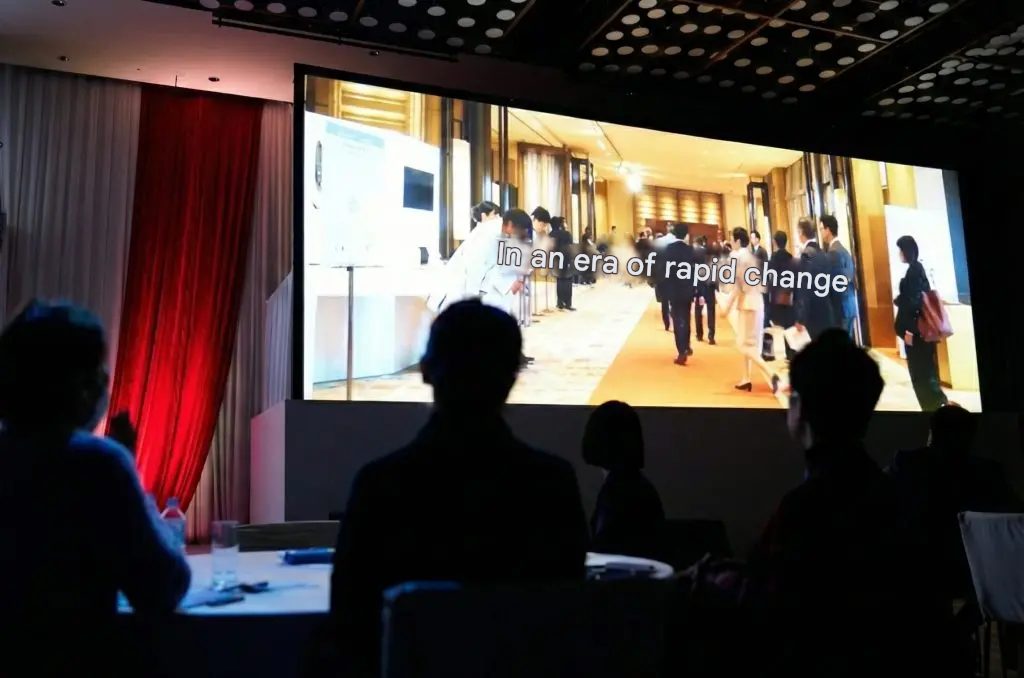
Today, the role of an event production company is clearly splitting into two paths.
One is the role of a vendor—planning, producing, and successfully delivering a commissioned event.
The other is the role of a partner—using events as a starting point to engage with the client’s ongoing challenges and transformation process, continuously validating outcomes through both data and real-world insight.
Without question, the latter is the more ambitious—and more rewarding—path.
The choice between these two paths fundamentally changes both the nature of the work and the level of responsibility involved.
When events are viewed as “points,” the conversation becomes:
“What should we do this year?”
But when viewed as “lines” or “planes,” the questions evolve:
“What has changed since last year? What should we update this year? What do we pass on to next year?”
This shift in perspective directly defines the quality of the planning itself.
Three Principles We Value in Our Recent Projects
In our recent work, we have been particularly focused on three key principles:
- Understanding the client’s strategy, business environment, and internal organizational context—positioning events not as standalone initiatives, but within a broader business and management framework.
- Continuously updating our understanding of challenges through ongoing dialogue with stakeholders, supported by both quantitative and qualitative data such as surveys.
- Designing not only for visual impact or novelty, but with a clear focus on whether the event will continue to deliver value even after it has ended.
For example:
How has the message from last year’s kickoff evolved this year?
How have satisfaction scores changed, and what do open-ended comments reveal?
Have employee behaviors or the quality of discussions improved, even slightly?
If not, it is not anyone’s fault—it is a matter of design.
What matters is not leaving these questions unanswered, but carrying them forward into the next iteration.
Once this loop begins to function, events stop being “one-time initiatives” and become part of an ongoing process of transformation.
Choosing Not to Deliver “One-Off Work”
As competition intensifies, we want to make one thing clear:
We do not choose to deliver work that ends with execution alone.
Market changes, evolving consumer values, and internal organizational challenges cannot be addressed in isolation or through one-off efforts.
That is why we define our role as designing communication that operates on the same timeline and scale as these challenges.
What is expected of event production companies goes beyond simply “creating a space.”
It is about understanding how that event connects to a company’s transformation—and what it generates next.
To the responsibility of creating, we must add the responsibility of continuously thinking.
This undoubtedly raises the level of difficulty—but it also elevates the scale of value we can deliver.
Rethinking the Role of Competitions
We often hear that “competitive bidding is a company rule, so it can’t be avoided.”
Personally, I don’t believe competitions themselves are unnecessary. Healthy competition has its place.
However, I sometimes feel that the enormous time, effort, and cost invested upfront are too easily divided into winners and losers—ending with “that’s it.”
If that same energy could instead be directed toward refining ideas further, or deepening understanding of the client’s context, the quality of events would undoubtedly improve.
Reframing events—not as “one-off internal initiatives,” but as part of a continuous process of corporate transformation—
This perspective is what ultimately determines whether an event company remains a vendor or becomes a true transformation partner.
Are we truly able to transform the “point” of an event into the “lines” and “surfaces” of a company’s story?
This is a question we do not want to look away from.
Rather than engaging as a one-time project, we choose to remain involved as ongoing engagement.
Rather than pursuing isolated successes, we aim to create value within the process of transformation.
This is the role that event production must play in the era ahead—
and the kind of work we aspire to deliver.

SUPERVISED BY

A collective of event production professionals handling the planning, production, and management of over 250 events annually.
From internal gatherings like shareholders' meetings, anniversaries, and award ceremonies to external PR events and exhibitions, we design and deliver optimal communication solutions. Whether in-person, online, or hybrid, we give form to the messages companies wish to convey.