

Brand Activation in Japan: How to Create Experiences That Move Audiences to Action
Brand activation is one of the most-used and least-agreed-on terms in modern marketing. For some teams, it means a pop-up. For others, an experiential campaign. For others still, a launch event, an influencer moment, or a live-streamed spectacle. The definitional looseness would be harmless if the outcomes were similar. They are not. The gap between a brand activation that genuinely moves audiences to action and a brand activation that merely draws a crowd is enormous—and the gap becomes visible immediately in a market like Japan, where audiences are unusually discerning about intent, presentation, and cultural fit.
This guide is written for brand and marketing leaders in Singapore, Taiwan, Korea, Thailand, the United States, and Europe who are considering Japan for an upcoming brand activation—consumer-facing, B2B2C, or internal transformation-focused. It draws on our work as a Tokyo-based event production company, on public market examples, and on the design principles that consistently distinguish activations that produce measurable behavior change from activations that produce impressive photos.
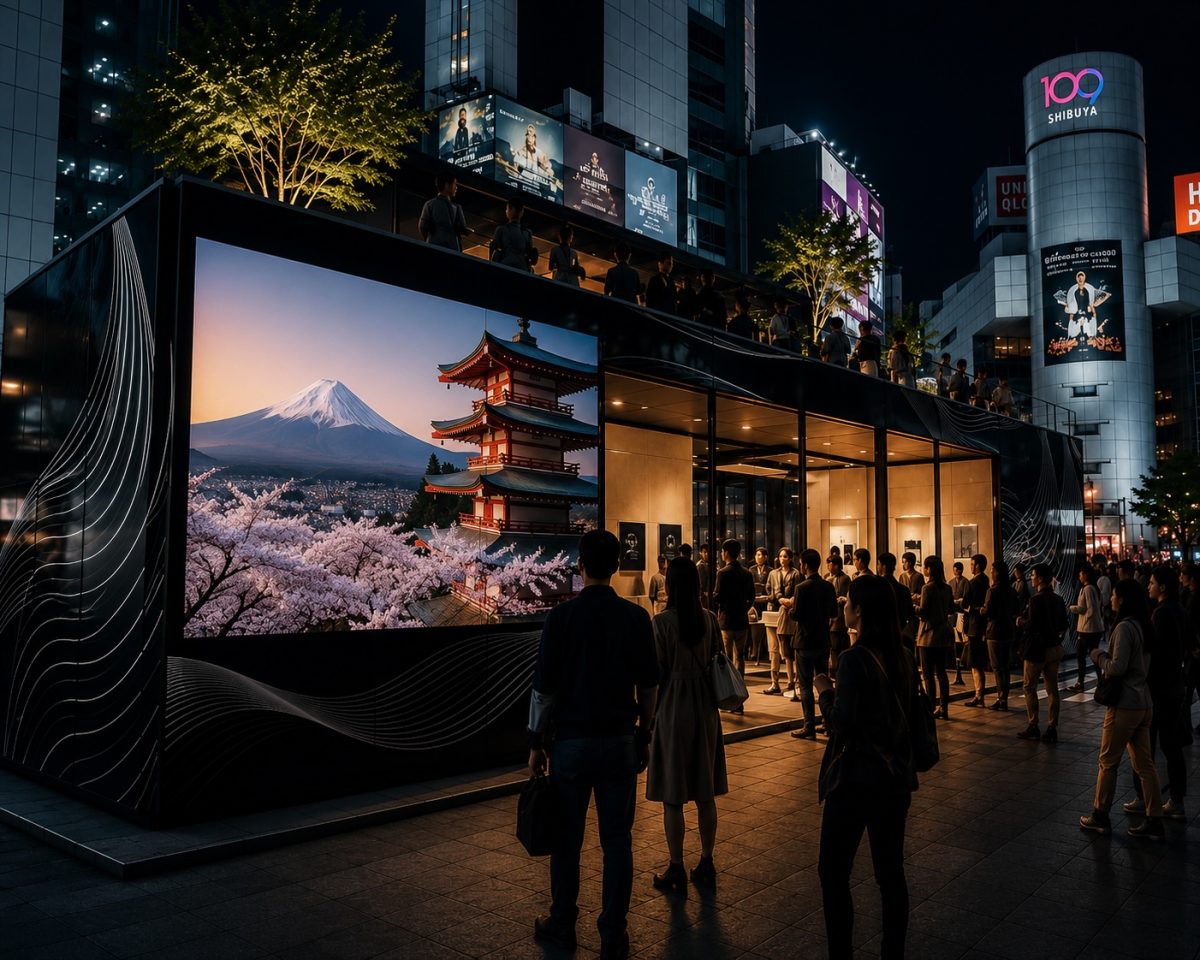
What Brand Activation Actually Means — and Why the Definition Matters in Japan
A working definition we return to at GLOBAL PRODUCE: a brand activation is an experience designed to move a specific audience from awareness or consideration into a defined action—purchase, subscription, download, sign-up, sharing, advocacy, or attitude change.
Three implications of this definition are decisive.
First, the action must be defined in advance. A campaign to “raise brand awareness” is not a brand activation; it is a brand impression campaign. A campaign to “convert 15,000 in-store visitors into LINE followers within three weeks” is a brand activation. The difference determines every downstream design choice.
Second, the experience must be designed, not just staged. Setting up a pop-up in Shibuya is staging. Designing the flow, the moment of decision, the shareable trigger, and the post-experience follow-up is activation. Most disappointing activations in Japan are the result of staging without design.
Third, brand activation is inherently cross-functional. It sits at the intersection of brand marketing, experiential production, PR, digital, and often retail or e-commerce. The organizations that struggle with brand activation are the ones that treat it as a single-function responsibility. The organizations that succeed treat it as a designed system.
In Japan, this definitional discipline matters more than in many other markets. Japanese consumers—and inbound Asian visitors experiencing Japan—arrive with high expectations of intentionality. When a brand activation feels vague, generic, or promotional-first, it registers as inauthentic and is dismissed. When it feels designed, purposeful, and culturally attuned, it is embraced, shared, and remembered.
Why Japan Is Structurally Strong for Brand Activation
Five converging conditions make Japan a particularly strong market for brand activation in the current environment.
1. Record-breaking inbound tourism. Japan welcomed approximately 36.9 million international visitors in 2024, followed by a new annual record of approximately 42.7 million in 2025, according to the Japan National Tourism Organization (JNTO). For consumer-facing activations, this creates a large and diverse audience of international visitors moving through major destinations such as Tokyo, Kyoto, and Osaka. Dentsu’s Japan Brand Survey also indicates strong international affinity toward Japan, creating favorable conditions for culturally relevant brand experiences.
2. Currency dynamics can favor overseas brands. Recent exchange-rate conditions have increased the purchasing power of budgets funded in SGD, USD, EUR, and KRW. The actual advantage varies over time, but international brands may be able to deliver a more ambitious production scope in Japan than the same budget would have supported several years earlier.
3. A mature ecosystem for extending physical experiences into digital engagement. Visually distinctive activations in Japan can extend beyond the venue through Instagram, TikTok, X, LINE, earned media, and post-event CRM. The most effective channel mix depends on the audience: visual platforms support public-facing content and UGC, while LINE is especially valuable for follower conversion, coupons, membership, and ongoing customer relationships.
4. Retail geography that concentrates attention. Shibuya, Harajuku, Omotesando, Ginza, Roppongi, and now Azabudai Hills provide compact, high-traffic zones where a well-designed activation can reach a disproportionate share of the target audience within a short campaign window.
5. A production ecosystem that meets global standards. The specialist vendor infrastructure in Tokyo—content production, spatial design, lighting, sound, digital integration, PR—operates at top-tier global standards. Access to it, however, still runs primarily in Japanese; this is where local production partnership becomes structural.
The Five Formats of Brand Activation That Work in Japan
Brand activation is not one format. It is a family of formats that share the “designed experience → measurable action” logic. Five formats consistently deliver results in Japan.
Format 1: Pop-up retail and pop-up café activations
One of the most widely used activation formats in Tokyo. Retail or café spaces in high-traffic districts such as Shibuya, Harajuku, Ginza, and Roppongi are transformed into brand experience environments for one to eight weeks. Best for launch moments, seasonal campaigns, and building direct consumer relationships in a market where a well-executed physical presence can signal long-term commitment.
Format 2: Landmark spectacle activations
High-visibility installations at iconic Tokyo locations—3D billboards, projection mapping, plaza installations, station takeovers. Best for awareness spikes coinciding with global launch moments where a single dramatic image needs to travel across the region.
Format 3: Cultural collaboration activations
Brand activations built around collaboration with Japanese cultural institutions, artists, craftspeople, or traditional performance groups. Best for luxury, premium consumer, and lifestyle brands seeking to signal both cultural respect and quality positioning.
Format 4: B2B2C branded events and salons
Invitation-based brand experiences targeting influencers, media, retail partners, and select consumers. Best for launches that need to build advocacy layers before a wider consumer push and for premium brands where scale matters less than the seniority of who is in the room.
Format 5: Internal brand activation for cultural change
While brand activation is often discussed in a consumer-marketing context, the same principle can be applied internally: a designed experience can move employees and partners from awareness of a brand direction to active understanding, alignment, and advocacy. These activations are best suited to milestones, transformations, and moments when a brand must be activated inside the organization before it can be activated outside. Our Autobacs 50th Anniversary Ceremony, themed “BEYOND AUTOBACS,” is a defining example of this format.
The right format depends entirely on the action the activation is designed to move audiences toward. Format decisions made independently of the desired action tend to produce visually beautiful activations that fail commercially.
How Japanese Consumer Behavior Shapes Activation Design
Four Japan-specific consumer patterns systematically shape activation design.
Intentionality over promotion. Audiences in Japan often respond strongly to experiences that demonstrate attention to detail, contextual relevance, and respect for the setting. The same activation concept can feel substantially more credible when it is designed around audience value rather than delivered as a hard sell.
Photo-worthy moments as first-class design elements. In markets where consumers photograph and share experiences on Instagram, X, LINE, and TikTok as a matter of course, the “shareable moment” is not a bonus—it is a load-bearing element of the activation’s design. Where does the queue photograph well? What is the object or backdrop that becomes the shared image? What hashtag or handle sits inside the frame?
LINE as a conversion and relationship-building channel. LINE is one of Japan’s most important channels for official-account follows, coupons, membership, notifications, and post-activation CRM. Instagram and TikTok are generally stronger for visual UGC, while X is useful for real-time conversation and topic momentum. Strong activations define the role of each platform rather than treating them as interchangeable.
Trust built through detail. In the Japanese market, production quality can function as a brand signal. Uneven signage, inconsistent staff communication, imprecise timing, or generic messaging can weaken credibility. The inverse is also true: precise operational delivery reinforces perceptions of brand care and integrity, even when the activation itself is playful or unconventional.
The Design Framework: From Insight to Amplification
A five-layer framework we use for brand activation design in Japan.
Layer 1: The insight
Not “consumers like our brand.” An actionable observation about a specific audience that points toward the experience they will value. Singapore millennials visiting Tokyo want to bring back stories, not products.Taiwanese luxury buyers want to feel they discovered something exclusive. Korean K-beauty fans want to demonstrate expertise, not simply consume. The insight sharpens everything downstream.
Layer 2: The action
The specific, measurable behavior the activation is designed to produce. Purchase; LINE follower conversion; content generation; email sign-up; sample distribution converted to online reorder; attitudinal shift measurable in exit survey. If the action is fuzzy, the design will be fuzzy.
Layer 3: The experience
The physical or physical-digital environment where the insight meets the audience and the action becomes irresistible. Venue, spatial design, sensory design, staffing, choreographed flow, and the choreographed moment of decision.
Layer 4: The story
The narrative the audience carries away and re-tells. This is what turns a single experience into a compounding marketing asset. If audiences cannot summarize the experience in one shareable sentence, the activation will not travel.
Layer 5: The amplification
The systems that convert the physical experience into ongoing marketing capacity—LINE integration, hashtag design, influencer coordination, PR seeding, retargeting infrastructure, and post-activation customer relationship management.
The five layers are designed together, not sequentially. Design that starts at the venue and works outward tends to produce beautifully-staged activations with weak amplification. Design that starts at the insight and works through action → experience → story → amplification tends to produce activations that continue paying returns months after the physical event ends.
Market Context: How Global Brands Have Activated in Japan
A few well-known market examples help calibrate what “strong activation in Japan” looks like from the outside.
Netflix Japan has used experiential activations tied to well-known series, including an immersive First Love installation featuring a recreated taxi and photo experience, alongside themed environments inspired by Bridgerton and Emily in Paris. Common signature: photo-worthy moments treated as first-class design elements, supported by precise production and clear amplification pathways. [See References 4–5.]
IKEA Japan built its “Tiny Homes” campaign around BLÅHAJ, using the character as a real-estate agent in a story about a highly compact Tokyo apartment. The campaign combined episodic content, a real physical space, and a distinctive shareable identity. Common signature: story-first activation connecting narrative, environment, and participation. [See Reference 6.]
Nike Japan used a large-scale 3D out-of-home activation in Shinjuku to celebrate Air Max Day, presenting oversized product imagery that appeared to break through the digital screen. Common signature: landmark spectacle designed to convert dense urban foot traffic into highly shareable regional visibility. [See Reference 7.]
These examples signal a competitive baseline: activations in Japan operate at a high production standard, integrate Japanese cultural context intentionally, and treat share-worthiness as a design element rather than a hoped-for outcome.
Case Studies from Our Portfolio
Three programs from the GLOBAL PRODUCE portfolio illustrate brand activation logic applied to different audience types.
Autobacs 50th Anniversary — Internal Brand Activation for Change
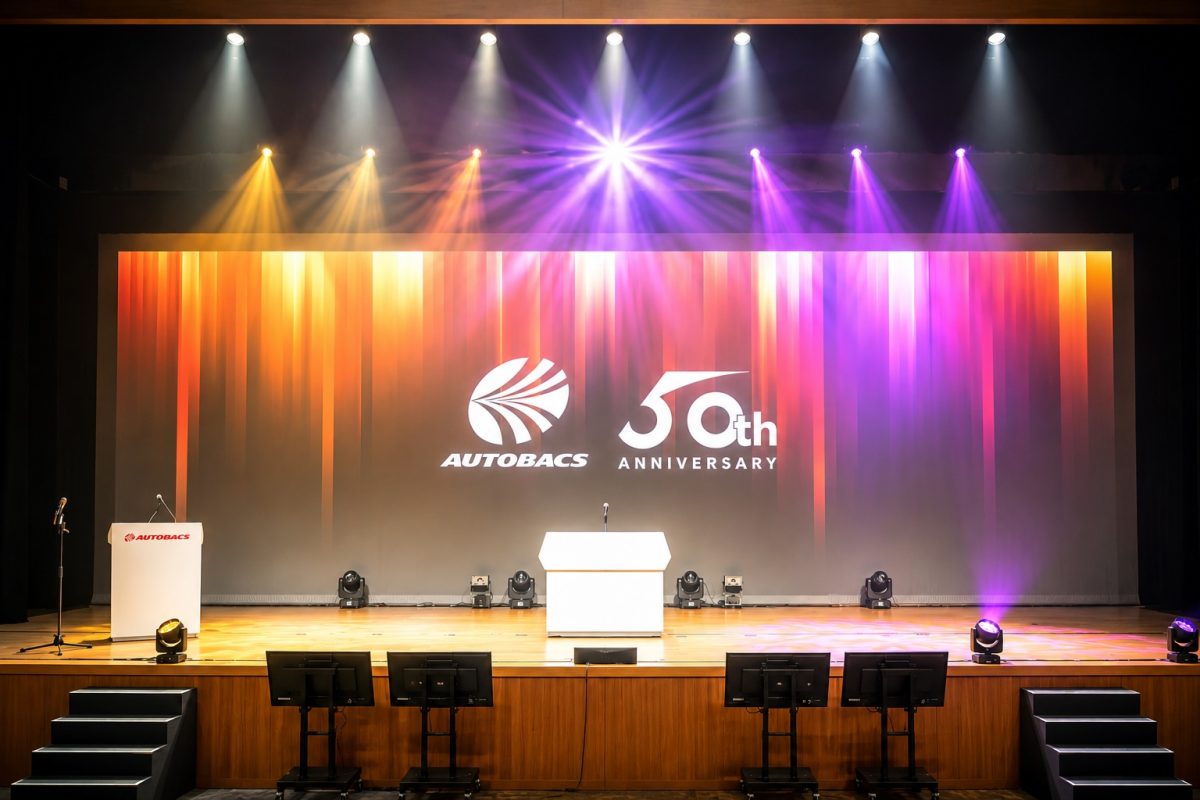
Client: Autobacs Seven Co., Ltd. Event: Autobacs 50th Anniversary Ceremony — September 5, 2024 Theme: BEYOND AUTOBACS
The Autobacs 50th was, in the language of this article, an internal brand activation: an experience designed to move Autobacs employees, dealers, and stakeholders from familiarity with the company’s history into active alignment with the future direction articulated as “BEYOND AUTOBACS.”
The design signature was explicit two-part structure—Part 1 for gratitude, Part 2 for future vision—with SparkUp interactive audience engagement built into the future segment. QR-code registration flows added a small operational signal of the transformation the organization was committing to. As the client described the outcome in their post-event interview: “From the program and staging to the operations, we designed the event so that we could allow the attendees to feel the drive to transform.” Full case study →
The strategic lesson for external brand activation: the same design logic—defined action, insight-driven experience, story-worthy moments, systematic amplification—applies whether the target audience is 1,000 employees or 100,000 consumers.
All Agu. Awards 2024 — Emotional Activation at Milestone
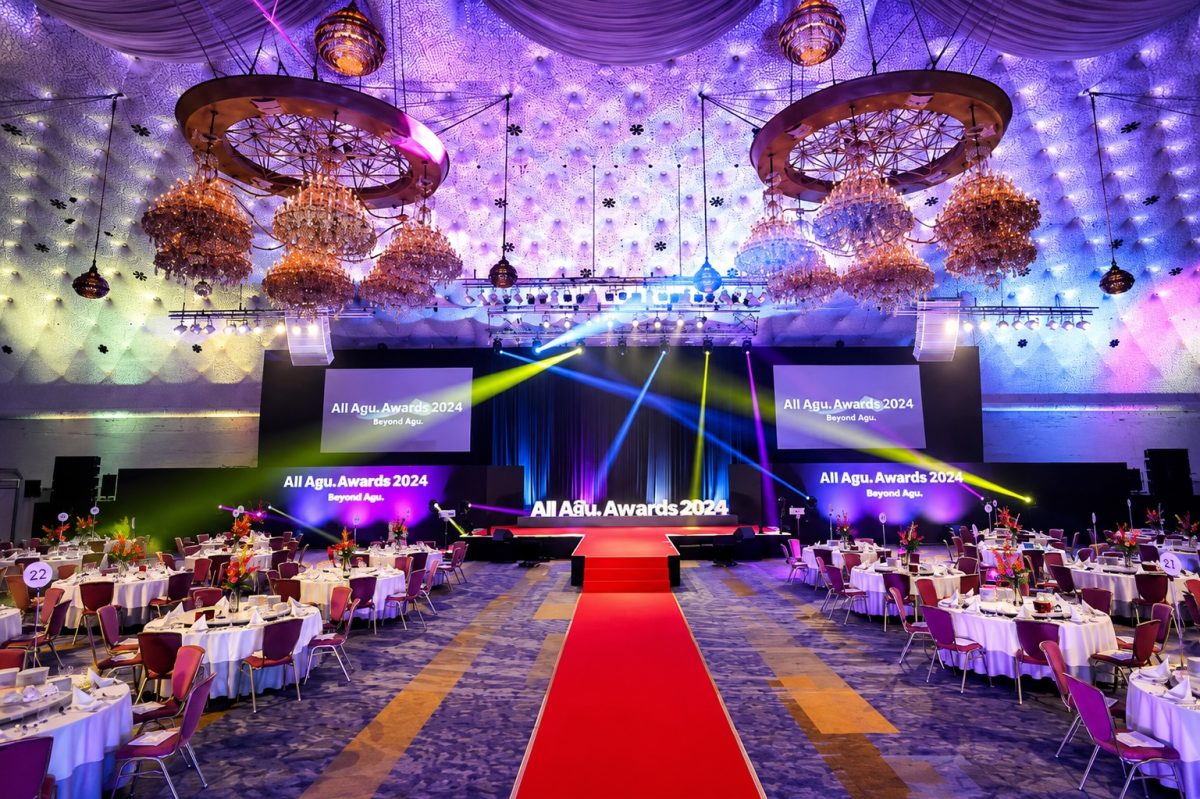
Client: B-first Co., Ltd. (Agu. Hair Salon group) Event: All Agu. Awards 2024 — August 22, 2024
Structured as an awards ceremony, this event functioned as a brand activation for the Agu. group’s 1,000-store milestone. The action the design was engineered to produce: an emotional shift in staff perception of what the group had become and what belonging to it now meant. The measurable outcome, in the client’s own reflection: “The post-event survey contained no negative feedback. Many remarked, ‘This is the most moving event I’ve ever attended.'” Full case study →
The lesson: emotional activation is measurable when the design starts from a defined behavioral or attitudinal action.
PX Mart — Cross-Market Activation in Japan
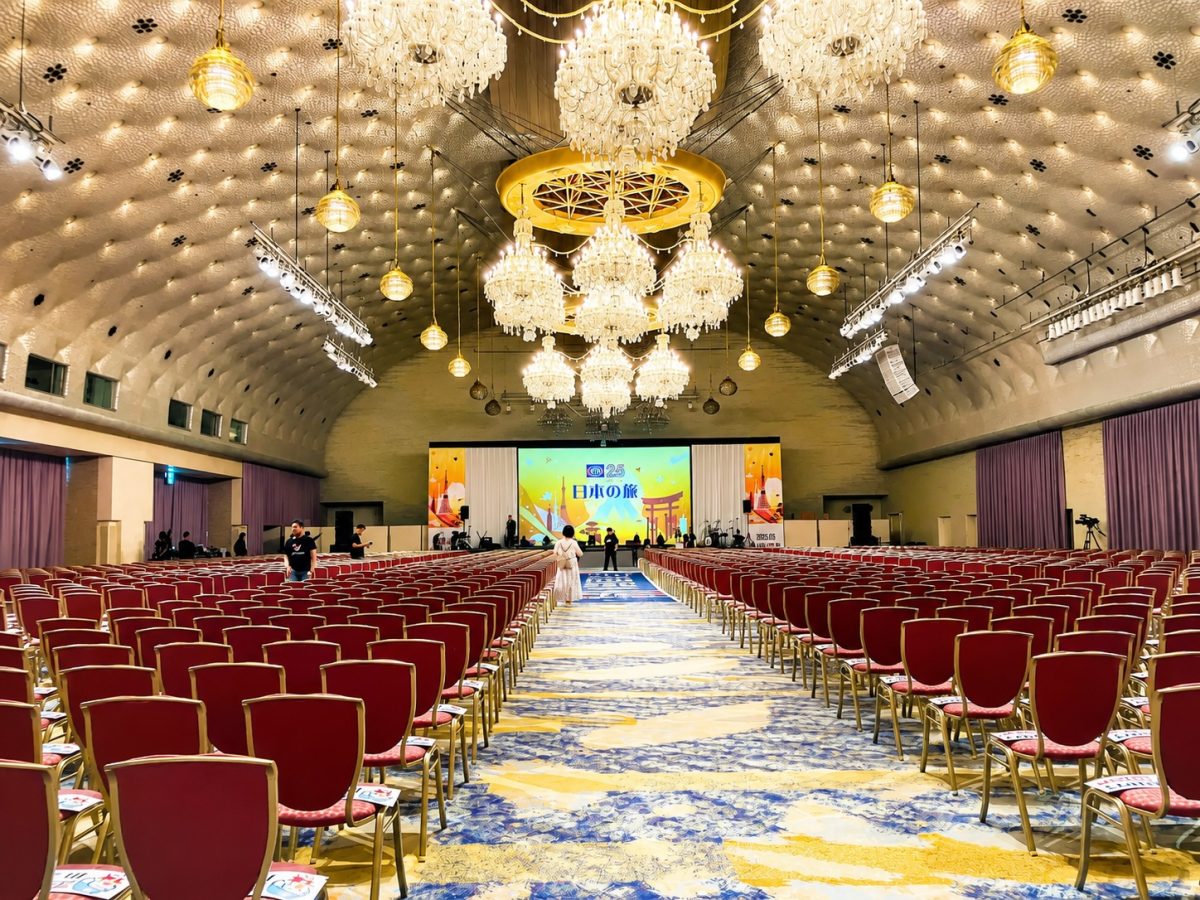
Client: PX Mart (Taiwan’s largest supermarket chain) Event: PX Mart 2023 in Japan — October 17, 2023
A reward event for Taiwanese employees held in Japan, this program illustrates cross-market activation logic: the audience is from one country, the design language is drawn from another, and the activation succeeds when the cultural translation is authentic rather than superficial. Japanese-style spatial design was integrated with motivation-driven program architecture designed for a Taiwanese retail workforce. Full case study →
For international brands designing consumer or partner activations in Japan targeting Asian audiences, this cross-market translation logic is the operational competence that determines whether the activation feels authentic or contrived.
For the deepest register of Japanese cultural integration—traditional venues, performance artists, craft masters, and cultural experiences designed for international audiences—our specialized inbound brand DRAGON EVENTS is purpose-built. The DRAGON EVENTS portfolio includes Kabuki-style stage productions, Taiko drum entertainment (Aska-gumi), Iaido swordsmanship performances (Hogyokukai), NINJA spectacles (Zipang-sha), calligraphy performances, Ikebana masters (Ichiyo School), and Senchado tea culture—resources that turn “Japanese cultural touch” from a marketing claim into an operational reality.
What Separates a Strong Activation from a Well-Executed Event
Five characteristics consistently distinguish brand activations that produce measurable behavior change from activations that produce impressive photos.
1. The action is defined and measured. “Convert 12,000 visitors into LINE followers with 40%+ retention at 30 days” is a defined action. “Build brand awareness” is not. Activations designed against defined actions can be optimized; activations designed against fuzzy goals cannot.
2. The insight is specific to the target audience. Generic audience assumptions produce generic activations. Specific insights—about Singapore visitors’ preference for compact narrative experiences, Korean fans’ expertise-signaling behavior, Taiwan luxury buyers’ discovery instinct—produce activations that feel written for their audience.
3. The shareable moment is a design element, not an afterthought. The point in the experience where the photo happens, the hashtag lives, and the story crystallizes is engineered. When it works, the activation’s reach multiplies through the audience’s own networks. When it doesn’t, the activation ends at the venue exit.
4. The amplification infrastructure exists before the activation opens. LINE integration, PR relationships, influencer coordination, retargeting pixels, follow-up email flows—these are built in advance, not scrambled after opening day.
5. The operational execution matches the brand quality. In Japan, where audiences and venue partners often expect a high level of consistency and attention to detail, operational precision reinforces brand integrity. Even playful activations require a meticulously delivered operational baseline.
How to Evaluate a Brand Activation Agency in Japan
The Japan brand activation agency landscape spans several structural types: global experiential agencies with Tokyo offices (Pico, Jack Morton network affiliates, MKG affiliates), specialized experiential and pop-up specialists (Barnastics and comparable Tokyo-based agencies), integrated event production companies with brand activation capability (GLOBAL PRODUCE and similar production-led specialists), and creative agencies with in-house activation practices.
Five tests that separate strong partners from polished ones:
1. The insight conversation. Ask a shortlisted agency to describe the audience insight their proposed activation is designed against. Strong agencies articulate the insight in one specific sentence. Weaker agencies describe demographic categories.
2. The action definition. Ask what specific action the activation is designed to produce and how it will be measured. Strong agencies name the metric and the target; weaker ones default to reach and impression numbers.
3. The shareable moment demonstration. Ask them to show, in a mockup or storyboard, where the shareable moment lives inside the experience. Strong agencies have designed this explicitly; weaker ones treat it as an assumption.
4. The Japanese cultural depth check. For international clients particularly, ask how their creative direction will translate authentically into Japanese cultural context. Strong agencies have a considered answer; weaker ones treat cultural fit as decoration.
5. The amplification blueprint. Ask to see the amplification plan—LINE integration, PR seeding, influencer coordination, follow-up flows. Strong agencies present this as integral to the design; weaker ones treat it as separate marketing work.
For brand activation projects that involve significant Japanese cultural integration—heritage venues, traditional performance, deep-cultural creative direction—our specialized brand DRAGON EVENTS is built specifically for this layer of the work.
Realistic Budget Benchmarks
Indicative production benchmarks for professionally produced international-brand activations in central Tokyo (venue, production, staffing, content, amplification, and contingency):
These figures are planning benchmarks, not fixed market prices. Costs vary significantly by venue size, campaign duration, spatial construction, content production, digital integration, technical complexity, media spend, influencer fees, and amplification scope. Confirm whether paid media and talent costs are included when comparing proposals.
- Compact pop-up activation, 1–2 weeks, single Tokyo location: ¥15M–¥50M (~US$100K–US$333K / ~S$135K–S$450K)
- Multi-week retail activation, single flagship location: ¥30M–¥100M (~US$200K–US$667K / ~S$270K–S$900K)
- Landmark spectacle activation, high-visibility installation: ¥50M–¥200M+ (~US$333K–US$1.33M+ / ~S$450K–S$1.8M+)
- Cultural collaboration activation with heritage venues and traditional performance: ¥40M–¥150M+ (~US$267K–US$1M+ / ~S$360K–S$1.35M+)
- B2B2C branded event / launch salon, 200–800 attendees: ¥30M–¥120M (~US$200K–US$800K / ~S$270K–S$1.08M)
- Internal brand activation ceremony (Autobacs-scale milestone): ¥60M–¥150M (~US$400K–US$1M / ~S$540K–S$1.35M)
For deeper venue-cost detail, see our Corporate Event Venues in Tokyo guide. For a complete cost framework across event line items including hidden costs typical of Japan, see our Cost of Hosting Event in Japan guide.
Common Mistakes International Brands Make
1. Importing the home-market activation unchanged. What works in a Singapore mall does not automatically work in Shibuya. The audience insight, the cultural cues, the amplification platforms, and the operational rhythm all differ.
2. Treating LINE as an afterthought. International brands often default to public social amplification and underinvest in LINE integration. For many Japanese audience segments, this leaves a major conversion, membership, coupon, and CRM channel underused.
3. Underestimating operational precision requirements. Expectations around timing, signage, staffing, queue management, and venue coordination can be particularly demanding in Tokyo. Execution that might pass in another market can weaken trust when it appears inconsistent or insufficiently localized.
4. Overinvesting in spectacle and underinvesting in flow. A striking installation with poor visitor flow produces impressive photos and frustrated attendees. Visitor flow is often the single highest-return element in the operational design.
5. Skipping the local partner. Even with strong global agencies leading strategy, Japan-based production and cultural depth is where the activation succeeds or fails. Two-tier subcontracting from a global agency through a local vendor rarely produces the integrated execution that Japanese audiences respond to.
Frequently Asked Questions
Q: How is brand activation different from a launch event or a pop-up?
A: A launch event and a pop-up are formats. Brand activation is a design discipline that can use those formats—or others—as vehicles. The distinction is that activation is defined by the action it is designed to produce, not by the format it uses. A pop-up without a defined audience action is simply a pop-up; a pop-up designed around a measurable action is an activation.
Q: What is the realistic lead time for a Japan brand activation?
A: For compact single-location activations, 3–5 months is workable. For multi-location or cultural-collaboration activations, 6–9 months is realistic. Landmark spectacle activations at high-profile locations often require 9–12 months. Venue lock-in at prime Tokyo locations (Shibuya, Ginza, Roppongi, Omotesando) is typically the longest-lead element.
Q: Can a brand activation designed for Singapore audiences travel to Japan unchanged?
A: Rarely successfully. The core brand idea can travel; the execution requires re-localization at the audience insight, cultural cue, spatial design, staffing, and amplification layers. Skipping the re-localization is the most common cause of underperforming international activations in Japan.
Q: What is the right measurement framework for a brand activation?
A: A three-tier framework works well. Tier 1: the defined action metric (LINE follower conversion rate, sales lift, sample-to-online-reorder rate). Tier 2: amplification metrics (earned media reach, hashtag mentions, share-of-voice movement). Tier 3: attitudinal shift metrics (brand favorability, purchase intent, NPS movement). Strong activations track all three.
Q: How much of the budget should go to amplification vs the physical experience?
A: There is no universal allocation. In our experience, an initial working model may allocate approximately 60–70% to the physical experience and 30–40% to amplification and post-activation systems. The appropriate balance depends on the objective, audience, campaign duration, paid-media plan, and whether amplification costs include influencer fees or media buying. The key principle is to fund amplification deliberately rather than treating it as a residual expense.
Q: Are Japanese cultural elements always the right choice for a Japan-hosted activation?
A: Not always. Cultural elements are a strategic tool, not a default. Luxury and premium brands, brands building narrative around craft and heritage, and brands targeting inbound tourists tend to benefit strongly. Mass-market brands, tech products, and brands whose global positioning is culturally neutral often produce stronger activations by treating Japan as a distinctive venue rather than a cultural theme.
Q: How does GLOBAL PRODUCE approach international brand activations?
A: We produce brand activations both as internal activations (Autobacs 50th “BEYOND AUTOBACS,” B-first All Agu. Awards) and as cross-market activations (PX Mart Japan for Taiwanese employees). For deeply culturally-integrated consumer-facing activations—heritage venues, traditional performance, Japanese craft as design elements—our specialized inbound brand DRAGON EVENTS is purpose-built and operates with bilingual project leadership as a structural default. See our approach detailed in our Business Events in Japan guide.
Conclusion
Brand activation succeeds in Japan when the design starts from a defined audience action and works outward through insight, experience, story, and amplification. It fails when it starts from a format—a pop-up, a landmark installation, or a celebrity moment—and hopes the design will follow. Japan’s structural strengths are considerable: record inbound volume, favorable conditions for international investment, concentrated retail geography, strong physical-to-digital campaign potential, and a production ecosystem operating at global standards. When activation creates both immediate action and sustained advocacy, it can become a mechanism for brand acceleration.
If you are considering a Japan-hosted brand activation and want to walk through the framework above against your specific brief, our team is available for a discovery conversation. As a Tokyo-based production company producing 200+ events annually, we bring end-to-end production capability, bilingual project leadership, and deep venue and cultural-experience relationships across Japan.
For activations where deep Japanese cultural integration is part of the brand story, our specialized inbound brand DRAGON EVENTS — with a curated inventory of heritage venues (Cerulean Tower Noh Theatre, HAMA-RIKYU GARDENS, Togo Memorial Hall, HOTEL GAJOEN TOKYO, Kyoto’s Minamiza Theatre and HEIAN JINGU KAIKAN, and more), traditional performance groups, and culinary experiences — is purpose-built for international planners.
References
1. JNTO. Visitor Arrivals to Japan. https://statistics.jnto.go.jp/en/graph/
2. Dentsu. Understanding the Japan Brand. https://dentsu-ho.com/en/articles/9001
3. Dentsu. Intentions to Visit Japan. https://dentsu-ho.com/en/articles/9025
4. Shibuya Cast. First Love pop-up event. https://shibuyacast.jp/event/detail/?cd=000071
5. Pen Online. Netflix experiential event. https://www.pen-online.jp/article/013364.html
6. IKEA Japan. Tiny Homes campaign. https://www.ikea.com/jp/en/newsroom/corporate-news/20211124-tiny-homes-pub9a8ea027/
7. Creative Review. Nike Air Max Day 3D billboard. https://www.creativereview.co.uk/nike-air-max-day-3d-billboard-campaign/
8. Tokyoesque. Pop-Up Culture in Japan. https://tokyoesque.com/pop-up-culture-in-japan-experiential-marketing/
9. LY Corporation. LINE usage data. https://data.linebiz.com/
[ Discover DRAGON EVENTS → ] [ Explore our Stage Design capabilities → ] [ Contact Us / Get a Quote → ]
SUPERVISED BY

A collective of event production professionals handling the planning, production, and management of over 200 events annually.
From internal gatherings like shareholders' meetings, anniversaries, and award ceremonies to external PR events and exhibitions, we design and deliver optimal communication solutions. Whether in-person, online, or hybrid, we give form to the messages companies wish to convey.