

The Expo Experience Everyone Was Talking About Comes to Tokyo: “Future of Life+” Opens
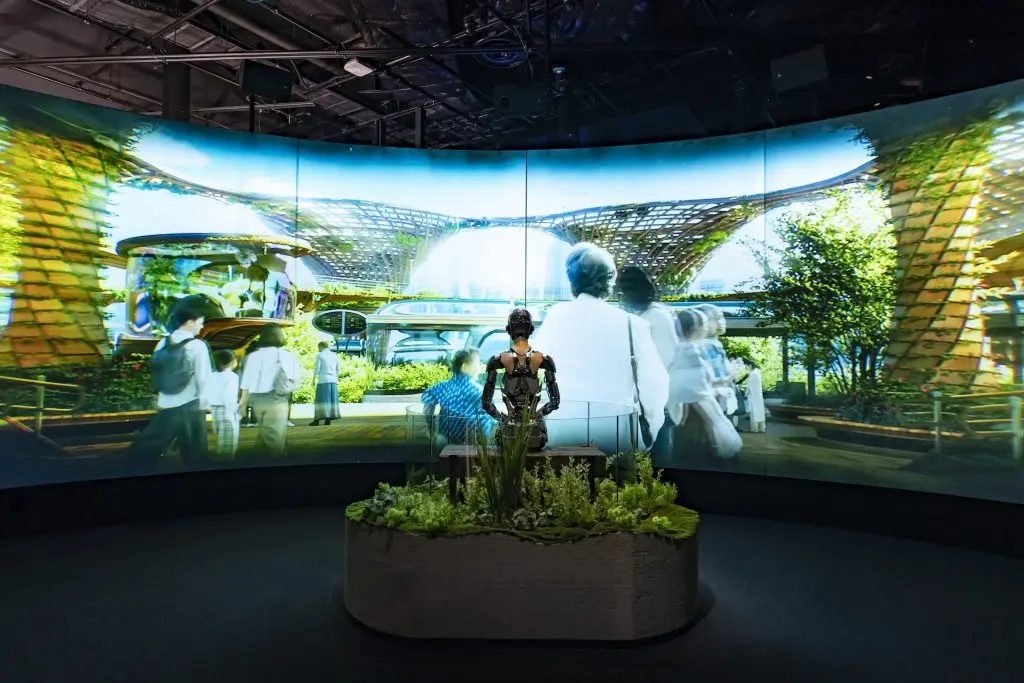
“What if an android appeared in front of you—and you couldn’t tell it apart from a human?”
The world of the Signature Pavilion “Future of Life,” which attracted widespread attention at Expo 2025 Osaka, Kansai, has now arrived in Tokyo with new stories and exhibits. Currently, “Future of Life+” is being held for a limited time through September 25 at MoN Takanawa: The Museum of Narratives in Takanawa, Tokyo.
Through encounters with the unknown—from remarkably lifelike androids and humans living more than 1,000 years in the future to an android modeled after Natsume Soseki that can converse using AI—the exhibition invites visitors to think about what it means to be “human” and what we mean by “life.”
This time, we’re taking you inside the experience.
“Future of Life,” a Highlight of Expo 2025 Osaka, Kansai, Comes to Tokyo
“Future of Life,” which drew significant attention at Expo 2025 Osaka, Kansai, was a Signature Pavilion produced by roboticist Hiroshi Ishiguro.
Imagining a future in which humans, androids, and technology coexist, the pavilion posed fundamental questions: What is life? What does it mean to be human?
For “Future of Life+,” that world has been reimagined for MoN Takanawa in Tokyo.
Rather than simply retracing the story presented at the Expo, the exhibition introduces new scenarios and displays, expanding the concept of the “future of life” even further—just as the “+” in its title suggests.
And this time, another question is added:
“How will we choose the future of life?”
Is the future simply something that happens to us? Or is it something we actively choose for ourselves?
With a question that takes the original Expo experience one step further, the story of “Future of Life+” begins.
Exploring the Future to Ask: What Does It Mean to Be Human?
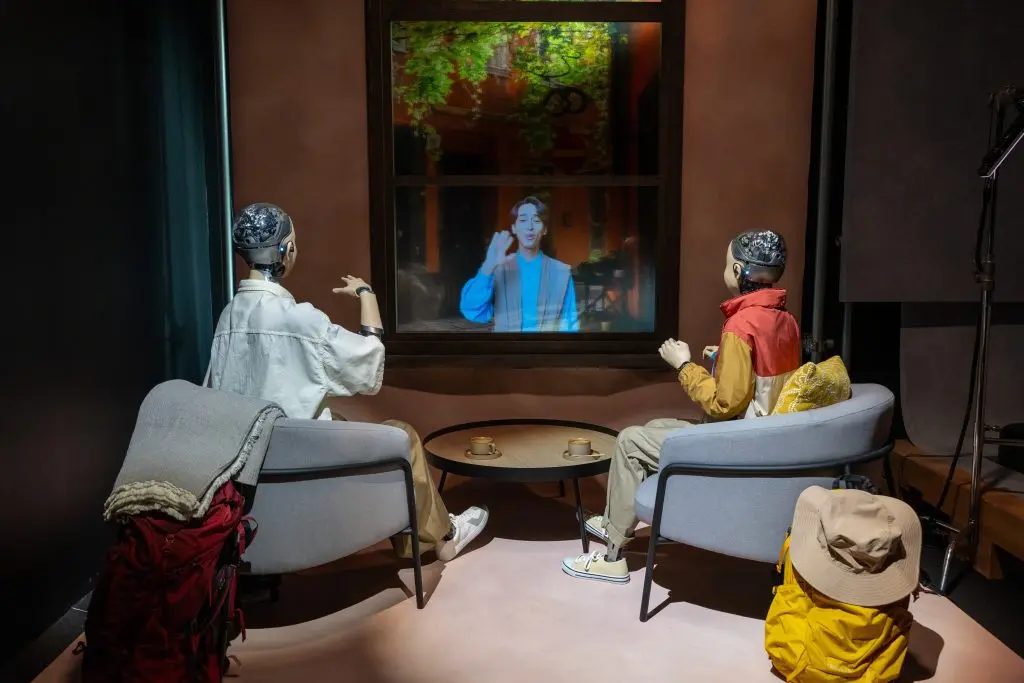
“Future of Life+” begins with the long history of humans giving a sense of “life” to objects, before moving forward through time—50 years into the future, and eventually more than 1,000 years ahead—to explore what the future of life might become.
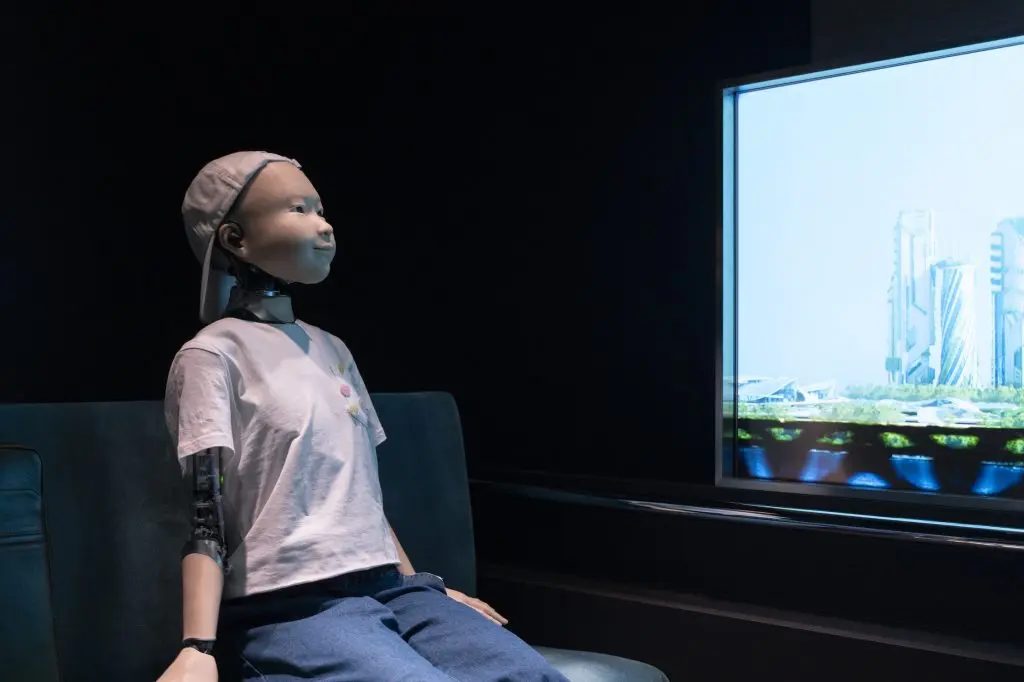
Along the way, we encounter androids living alongside humans and beings that exist in an even more distant future. As time moves forward, the questions themselves begin to shift: What is a human? What separates humans from androids?
50 Years from Now—Yamatoid, an Android That Feels Almost Human
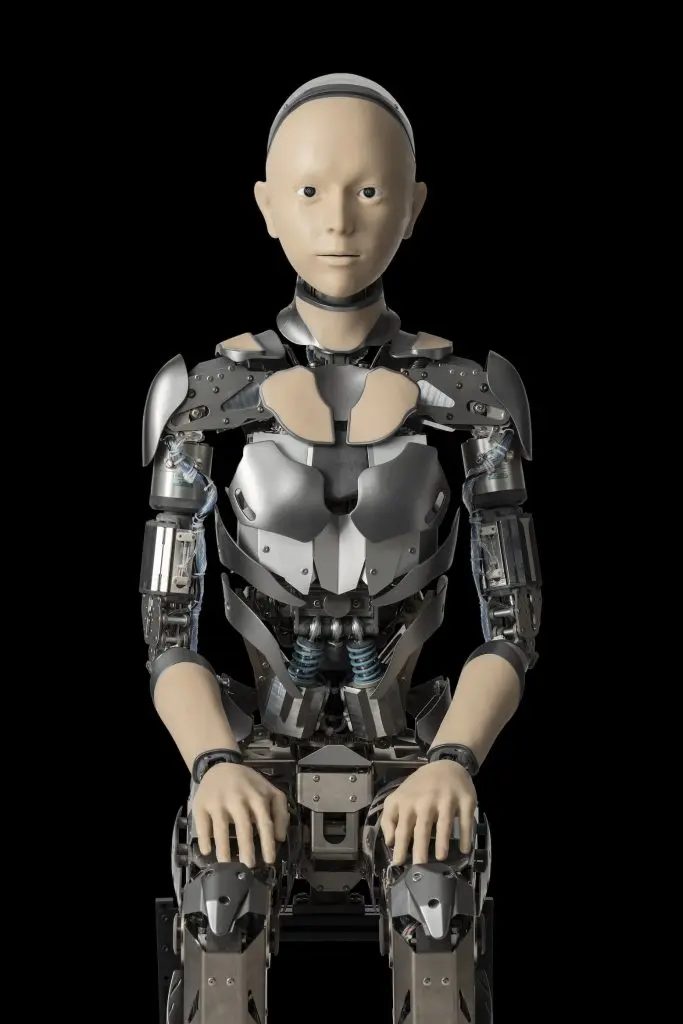
In ZONE 2: 50 Years into the Future, we meet Yamatoid, an avatar android embodying the spirit of Japan.
With approximately 60 movable joints, Yamatoid achieves remarkably smooth, humanlike movements. From a distance, it looks natural enough to be almost indistinguishable from a real person.
Move closer, and the effect becomes even more striking. Its chest gently rises and falls as though it were breathing. It blinks slowly. Its expressions shift ever so slightly.
It feels strangely real.
You know, logically, that the figure standing in front of you is a machine. And yet, you may feel as though your eyes have met—or even hesitate slightly before staring at it for too long.
Before you realize it, the feeling shifts from “observing an android” to something closer to standing face-to-face with another person.
And that raises a question:
What exactly makes us perceive something as “human”?
Blinking. Breathing. Eye contact. Tiny changes in facial expression.
Perhaps these ordinary behaviors—the ones we barely notice in everyday life—play a much bigger role than we realize in making us perceive someone as a person.
“Fifty years from now, humans and androids will coexist.”
When you simply hear those words, it still sounds like a distant future. But when you stand in front of Yamatoid and realize that you are instinctively responding to it almost as you would to another human being, that future suddenly feels a little closer.
1,000 Years from Now—Momo Challenges Our Definition of “Human”
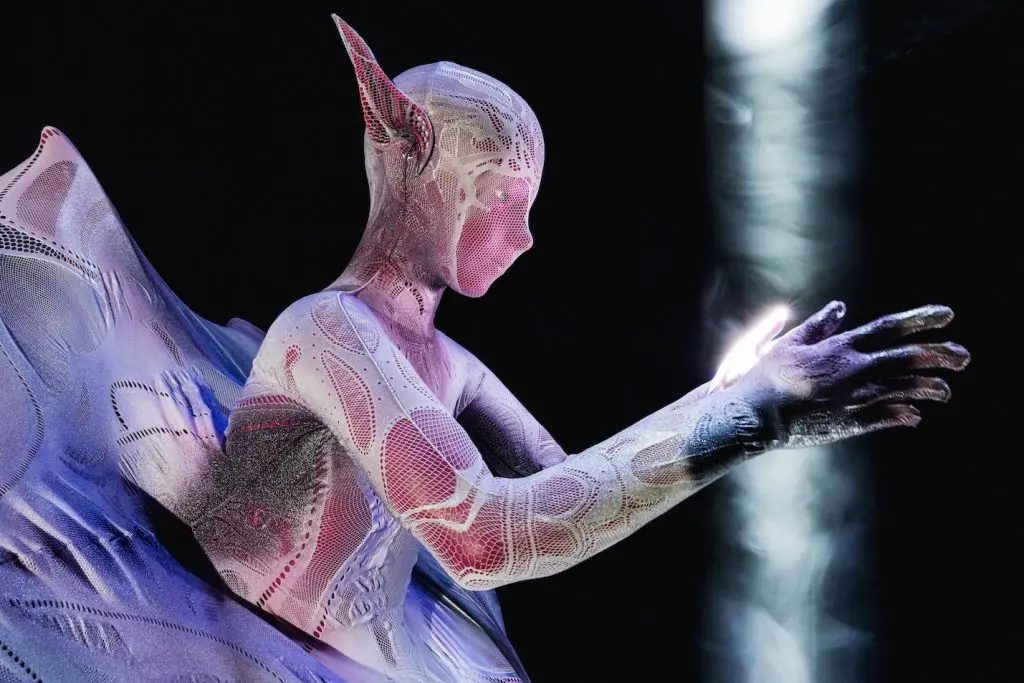
The exhibition then takes us more than 1,000 years into the future.
Here, we meet Momo, a “Millennium Human” living in a world where the boundary between humans and androids has disappeared.
With an organic-looking body covered entirely in silicone skin and slow, floating movements, Momo looks completely different from Yamatoid—and very different from what we currently imagine when we think of a “human being.”
And yet, after watching Momo for a while, something interesting happens.
You begin to feel a strange sense of familiarity.
With Yamatoid, we perceived “humanness” through a familiar human appearance and humanlike behavior. But Momo raises a different question: If something looks so different from us, why can we still feel a sense of connection to it?
Fifty years into the future, humans and androids may still coexist as separate beings. But more than 1,000 years from now, replacing parts of our bodies with machines—or even completely changing our physical form—may have become perfectly ordinary.
If we become free to change both our bodies and our appearance, what will remain that allows us to call ourselves “human”?
Looking nothing like Yamatoid, Momo quietly challenges the image of humanity that we currently take for granted.
And in the future Momo represents, perhaps it won’t be only the human body that changes.
As we continue to evolve alongside technology, our very understanding of what it means to be “human” may evolve as well.
The exhibit invites us to imagine a future in which even that definition is no longer fixed.
From “Watching” to “Talking”: A Conversation with the Soseki Android
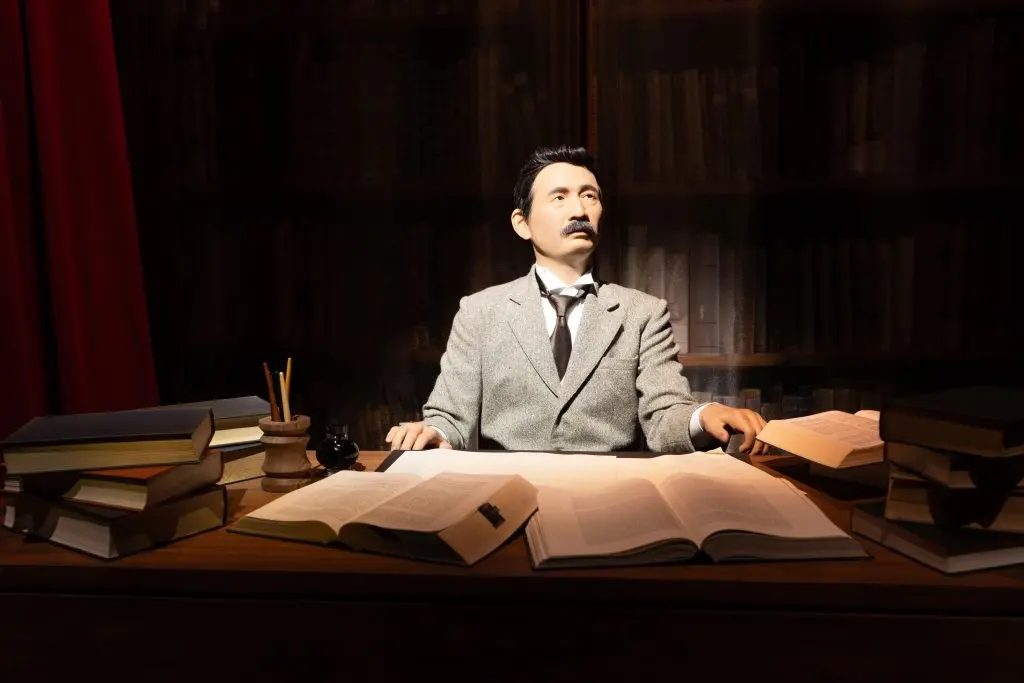
After encountering Yamatoid and Momo, the experience shifts from observing androids to actually speaking with one.
Until this point, we have been the ones “watching” the exhibition. Here, however, visitors can speak directly to an android and take part in a conversation.
The android we meet is the Soseki Android, modeled after Japanese novelist Natsume Soseki.
Soseki, who lived more than a century ago, has been recreated as an android and combined with modern AI technology, allowing visitors to actually engage in conversation with him.
What makes the experience particularly interesting is that his answers are not simply prerecorded or prepared in advance.
AI generates responses in real time, meaning the conversation changes depending on what you choose to ask.
And once you actually begin talking with him, the experience becomes difficult to describe as simply “receiving answers from a machine.”
You say something, and he responds. You listen to his answer and think about what to say next.
The longer the exchange continues, the more the figure in front of you begins to feel less like an “exhibit” and more like someone you are actually having a conversation with.
And that raises another question:
What if our sense of someone’s humanity comes not only from their appearance or physical body, but also from the relationship we create through conversation?
The boundary between humans and androids that we explored by “watching” Yamatoid and Momo suddenly becomes a much more personal question when we ourselves begin “talking” with an android.
The Exhibition Ends, but the Questions Continue
Standing face-to-face with the remarkably humanlike Yamatoid. Watching Momo, a being imagined more than 1,000 years into the future. And finally, exchanging words with the Soseki Android.
As you move through the exhibition, the questions “What is a human?” and “What is life?” gradually change shape—and eventually turn back toward you.
“Future of Life+” does not show us the “right answer” to the future.
What stays with you instead is the way something that initially seemed like a story about the distant future gradually becomes something personal:
What makes something feel human to me?
What kind of future would I choose?
You may come to see the future, but by the end, what you find yourself facing is who you are in the present.
And perhaps that is what makes “Future of Life+” such an intriguing exhibition.
Rather than simply “showing” visitors something, it encourages them to feel, think, and leave the venue carrying questions that continue long after the experience itself has ended.
An experience doesn’t necessarily have to be complete when the event is over. Allowing it to continue inside each participant may itself be one of the values an event can create.
During the exhibition period, talk events featuring figures including Yoichi Ochiai are also being held. Visitors can also explore supplementary materials that take the exhibition deeper, including activity books, exhibition catalogs, related publications, and original merchandise.
The experience doesn’t end when you finish looking at the exhibits.
You think about what you saw. You talk about it with someone else. And from there, another question emerges.
“Future of Life+” is an exhibition best enjoyed with that sense of open-ended possibility.
After thinking about the “future of life,” what kind of future would you imagine?
See you next time!

SUPERVISED BY

A collective of event production professionals handling the planning, production, and management of over 200 events annually.
From internal gatherings like shareholders' meetings, anniversaries, and award ceremonies to external PR events and exhibitions, we design and deliver optimal communication solutions. Whether in-person, online, or hybrid, we give form to the messages companies wish to convey.