

What Is a PR Event? Types, Successful Examples, and How to Choose an Event Company
What Is a PR Event?
A PR event is an event organized by a company to introduce a new product or service, communicate its brand values, or share key messages with the media and customers.
PR events can take many forms, including press conferences, launch parties, experiential events, and media tours. What they all have in common is that they are designed to do more than simply deliver information. By giving participants the opportunity to experience something firsthand and creating moments that spark an emotional response, PR events generate impressions that can then spread to a much wider audience through newspapers, television, social media, and other channels.
In recent years, PR events have once again attracted attention as an effective way to communicate a brand’s identity, values, and vision—things that can be difficult to fully convey through advertising alone.
Why Are PR Events Attracting Attention Now?
With online advertising and social media content everywhere, it has become increasingly difficult for corporate messages to stand out. Skipping videos and blocking ads have also become common behaviors, making one-way communication less effective than it once was.
Against this backdrop, the value of real-world, firsthand experiences is being rediscovered.
Picking up a product with your own hands. Experiencing its scent. Talking with someone face-to-face. These kinds of firsthand experiences leave a completely different impression from simply watching a video or reading an article.
PR events also provide a mechanism for extending those experiences far beyond the venue through media coverage and influencer content. Even if only a limited number of people can attend in person, the articles, social media posts, and word of mouth generated there can communicate the appeal of a brand to many more people who were not present on the day.
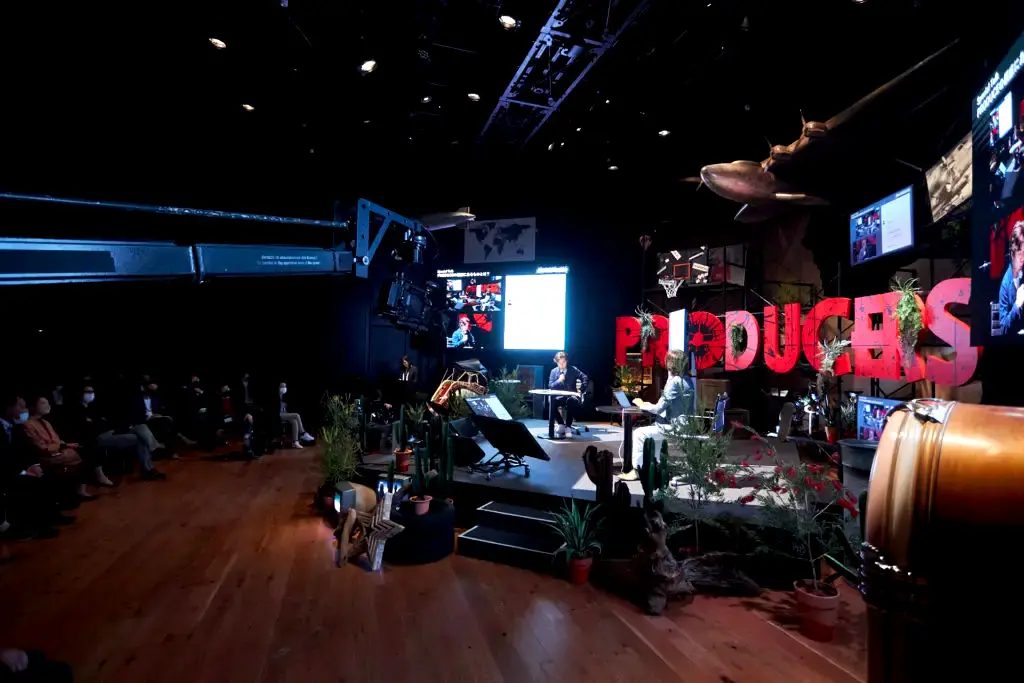
Main Types of PR Events
“PR event” is a broad term, and the right format varies depending on the objective and target audience. Here are six of the most common types.
1. Press Conferences and Media Briefings
These events invite members of the media to announce new products, services, or business strategies. One of their biggest advantages is the opportunity for executives and developers to communicate the background, vision, and thinking behind an announcement directly—details that can be difficult to convey through a press release alone.
2. Product Launches and Launch Events
These events are held to coincide with the release of a new product or service. In addition to members of the media, existing customers and influencers may also be invited.
By combining product displays, demonstrations, hands-on experience booths, talk sessions, and other content, companies can communicate the appeal of a product from multiple perspectives.
3. Launch Parties
A launch party combines a product launch with the atmosphere and social elements of a party.
Often invitation-only and relatively intimate in scale, launch parties allow guests to spend more time experiencing a product while enjoying food, drinks, and conversation. This makes them particularly suitable for highly loyal customers and influencers with whom a brand wants to build deeper relationships.
4. Experiential Events and Pop-Ups
These events allow customers to directly experience a product or immerse themselves in a brand’s world.
They can take many forms, including limited-time pop-up stores, experiential booths installed in public spaces, and in-store product trials. Their flexibility also makes them particularly effective when social media sharing is one of the objectives.
5. Media Branding Events
Rather than focusing on the announcement of a specific product, these events are designed to communicate a brand’s overall identity, philosophy, and values to the media.
By encouraging media professionals to take an interest in the company or brand itself, these events can lead to ongoing coverage and feature stories over the medium to long term.
6. Talk Sessions and Conferences
Talk sessions featuring industry leaders and experts, as well as conferences built around a specific theme, can also function as PR events.
They can be particularly effective when a company wants to demonstrate thought leadership within its industry or attract coverage from trade and industry media.
Choosing the Right PR Event for Your Objective
The ideal PR event format and design can change dramatically depending on what you want to achieve. A good starting point is to work backward from your objective.
| Objective | Recommended Event Format | Key Planning Considerations |
|---|---|---|
| Build broad awareness of a new product | Press conference + launch event | Media interview flow / coordination with press releases |
| Communicate the brand’s identity and world | Experiential event / pop-up | Spatial design / content that engages the senses |
| Show appreciation to existing customers | Launch party / invitation-only event | Guest list strategy / personalized experiences |
| Generate buzz on social media | Experiential event / photo spot | Shareable moments / hashtag strategy |
| Build ongoing media coverage | Branding event / talk session | Inviting industry leaders / building relationships with editors |
Five Keys to a Successful PR Event
1. Start by Defining Your Objective and Target Audience
Because PR events offer so much freedom in both format and content, moving forward without a clear objective can easily result in an event that feels exciting on the day but leaves everyone wondering, “What exactly were we trying to communicate?”
At the beginning of the planning process, make sure the team clearly defines why the event is being held and who it needs to reach.
Doing so also makes it much easier to evaluate what worked and what could be improved after the event.
2. Design a Consistent Experience Around the Brand
One of the most important aspects of a PR event is ensuring that participants continue to feel the character of the brand from the moment they enter the venue until the moment they leave.
Everything contributes to the experience: the colors used in the space, the background music, the food and drinks served, and even the language used by event staff.
When these details are carefully aligned with the brand, the overall impression becomes much stronger.
3. Carefully Design the Experience for Media and Influencers
One of the greatest strengths of a PR event is its ability to reach far beyond the number of people physically attending through media coverage and online content.
Create an environment that makes it easy for journalists to conduct interviews, and provide visually appealing locations where influencers will naturally want to take photos and share content.
In other words, think about how to make the event easy to share and easy to cover.
Preparing a press kit in advance—including press releases, photography, and video assets—can also make it easier for the event to generate media coverage and social content.
4. Create Moments Participants Will Want to Talk About
Will someone leave your event wanting to tell another person, “That event was great”?
The answer can have a major impact on how far word of mouth spreads.
Photo spots, limited-edition items, unexpected content, and memorable production elements can all provide a reason for participants to talk about the experience afterward.
5. Plan Post-Event Communication and Content Repurposing
The impact of a PR event does not have to end on the day itself.
Video footage, photography, participant testimonials, and speaker presentations can later be repurposed for sales materials, social media posts, webinars, white papers, and other content, extending the value of the event over time.
If you decide during the planning stage what assets you want to capture and which channels you intend to use afterward, post-event communication becomes much smoother.
Examples of Successful PR Events
Here are several examples that can provide inspiration when planning and producing a PR event. Where applicable, we have clearly indicated GLOBAL PRODUCE’s involvement.
INNOVATION of iTero 2024 — Invisalign Japan
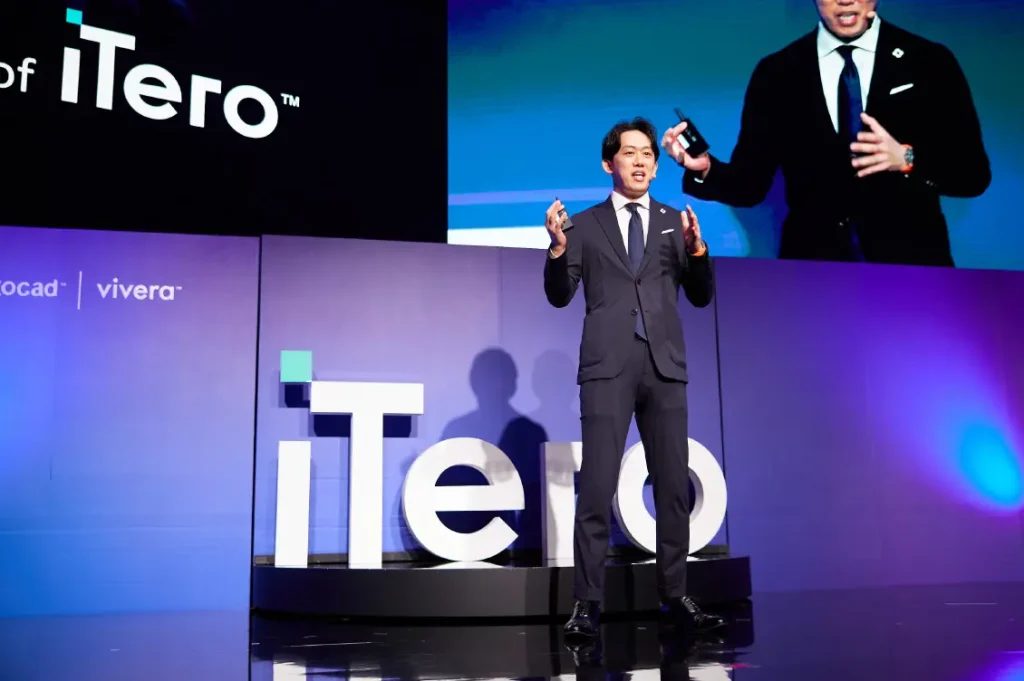
This was a product launch event for the iTero Lumina intraoral scanner, designed for dental professionals.
Rather than simply introducing the product itself, the event approached it from a broader perspective, including improvements in operational efficiency and the future of dental care. The experience was designed to help attending dental professionals see the new product as something directly relevant to their own work.
Special attention was also given to catering, with plenty of time provided for guests to relax and interact with one another. This networking element was another well-received aspect of the event as a PR experience designed specifically for professionals.
CLASH DE Cartier Pop-Up — Cartier
Held in Harajuku in 2019, this pop-up by luxury brand Cartier offered a striking example of how a luxury brand can connect with the sensibilities of a younger generation.
Cartier’s signature playfulness and innovative spirit were expressed through mirrors, spatial design, and other creative elements. The combination of “luxury × street culture” offers a useful perspective for many brands looking to connect seemingly different worlds.
RADIO HERMÈS — HERMÈS
Also held in Harajuku, RADIO HERMÈS was a limited-time radio station created by HERMÈS.
What made the concept particularly interesting was that, rather than having the brand simply “speak” to its audience, it created a place where conversations could happen around the brand.
Instead of focusing on selling products, the experience invited visitors to engage with the culture of HERMÈS itself—an approach that offers valuable inspiration for how PR events can evolve beyond conventional product promotion.
SCOPES Tokyo driven by Porsche — Porsche
This event by Porsche combined digital art with an immersive brand experience.
Rather than focusing on the functional qualities of automobiles, the event used art to express Porsche as a brand that participates in and helps shape contemporary culture.
It offers a strong example of how an established B2C brand can create new connections with potential fans by allowing people to experience its worldview rather than simply learn about its products.
@cosme TOKYO — @cosme
@cosme TOKYO is the brand’s flagship store in Harajuku.
Rather than functioning simply as a retail store, the space was designed as a place where visitors could experience the future of beauty. Extensive product testers, consultation services, and social-media-friendly photo opportunities are all integrated into the experience.
The idea of treating a physical retail space itself as a platform for PR and brand experience offers valuable inspiration for brands with brick-and-mortar locations.
How to Choose a PR Event Company
If you are considering outsourcing your PR event, you may be wondering what criteria to use when choosing a partner.
Here are five points that are particularly important for PR events.
1. Review Their Track Record in PR Events
PR events require a different set of skills and expertise from internal award ceremonies or corporate anniversary events.
Check whether the company has experience with PR-specific requirements such as media relations, influencer coordination, and communication planning.
2. Check Whether They Can Support the Entire Process, from Planning to Communication
The success of a PR event is not determined by the event day alone.
If one partner can support everything from pre-event teaser communications and on-site production to post-event content repurposing, it becomes much easier to maintain a consistent concept throughout the entire project.
3. Consider Their Media and Influencer Network
The results of a PR event can vary significantly depending on who attends.
It is worth checking whether the company can support the selection of relevant media outlets and influencers, pre-event outreach, and on-site guest management.
4. Evaluate Their Creativity in Spatial and Experience Design
At a PR event, the quality of the experience directly influences how participants perceive the brand.
Look at photographs and videos from previous projects to see whether the creative execution was consistent with each brand’s identity and whether the experience was designed to genuinely engage participants.
5. Look at Their Proposal Skills and Communication Style
During the initial meeting, pay attention to whether the company genuinely listens to what you want to achieve.
Just as importantly, consider whether they simply follow instructions or contribute ideas and recommendations from a professional perspective.
This is something that can be difficult to judge without actually speaking with them, so meeting with several companies can be helpful.
Frequently Asked Questions (FAQ)
Q. How Far in Advance Should We Start Preparing for a PR Event?
It depends on the scale, but for a medium-sized or larger PR event, starting preparations three to six months in advance is generally ideal.
Popular venues and media professionals’ schedules can fill up quickly, so securing the venue and date early is a good place to start.
Q. How Can We Attract Media and Influencers?
If your company already has relationships with relevant media outlets, direct outreach to those contacts is usually the starting point.
If your network is limited or you want to reach media outside your usual industry, working with the network of a PR agency or event production company can help expand your reach.
Q. Are PR Events Effective for B2B Companies?
Yes. One of the advantages of PR events is that they can be effective across a wide range of industries.
For B2B companies, selecting a format suited to the objective—such as a product presentation for professionals or a branding event for industry media—can help generate meaningful results.
The iTero Lumina event introduced above is one example of a successful PR event designed specifically for dental professionals.
Q. Can PR Events Be Held Online?
Yes. PR events can take many online formats, including livestreamed events, prerecorded programs, and hybrid events that combine in-person and online participation.
However, online events require their own expertise, such as creating visually engaging content that keeps viewers interested and designing opportunities for two-way communication. Working with a company that has experience in online event production can make the process much smoother.
Q. How Should We Measure the Effectiveness of a PR Event?
The right metrics depend on the event’s objectives.
For awareness, you might track the number of media placements, social media posts, and overall reach. For relationship-building, NPS or participant satisfaction surveys may be useful. For business impact, you might measure inquiries, qualified business opportunities, or changes in branded search volume.
It is best to decide how success will be measured before the event so that results can be compared before and after.
Q. Is There Value in Holding a Small-Scale PR Event?
Absolutely.
Even with only 20 to 50 invited guests, the impact can be significant if those attendees have strong influence or are key figures within the industry.
Rather than focusing solely on the size of the event, it is often more important to think carefully about who you want in the room.
Q. What Are the Best Ways to Communicate and Repurpose Content After the Event?
Event photography and video can be repurposed across sales materials, social media posts, owned-media articles, webinars, white papers, and other channels.
Deciding during the planning stage what assets you want to capture and where they will eventually be used makes post-event communication much easier.
Q. Is It Better to Plan a PR Event In-House or Work with Professionals?
If your organization has team members with extensive PR event experience, producing the event internally may be a viable option.
However, if this is your first PR event or you need specialist expertise in areas such as media relations or spatial production, working with an experienced event company can provide consistent support from concept development and production through to post-event initiatives.
Q. What If We Just Want to Discuss an Idea Before Making Any Decisions?
That’s absolutely fine.
You don’t need to have a finalized plan before reaching out. Even if you are still at the stage of saying, “We have a rough idea,” we can start by discussing your objectives, preferred timing, and approximate scale, and develop the concept together from there.
Feel free to contact us through our inquiry form.
Conclusion
PR events are an important way for companies to communicate new value, ideas, and brand messages to the media and customers through firsthand experiences.
Because there is so much flexibility in both format and content, designing the event around a clearly defined objective and target audience is one of the most important steps toward success.
At GLOBAL PRODUCE, we draw on our experience producing more than 200 events annually to create PR events for companies across a wide range of industries and event scales.
Even if you are only at the early stage of wondering, “Could we create an event like this?”, we would be happy to hear from you and explore the possibilities together.

SUPERVISED BY

A collective of event production professionals handling the planning, production, and management of over 200 events annually.
From internal gatherings like shareholders' meetings, anniversaries, and award ceremonies to external PR events and exhibitions, we design and deliver optimal communication solutions. Whether in-person, online, or hybrid, we give form to the messages companies wish to convey.