

Corporate Event Venues in Tokyo 2026: A Local Production Guide
Tokyo’s corporate event venue inventory is one of the deepest in Asia. The depth, however, is not visible from outside Japan. Most international planners arrive at a shortlist that recycles the same five hotel ballrooms—because those are the venues with English-language booking systems and visible international marketing. The Tokyo venues that consistently produce the most memorable events for our clients are often the ones that do not appear in the first ten Google results.
This guide is an attempt to map the full inventory the way we work with it ourselves. We have organized venues into six functional categories, indicated the kind of event each category serves best, and flagged the practical constraints international planners need to understand before committing.
For a comprehensive overview of our in-house venue curation service—including access to venues that are difficult to book through standard channels—see our VENUE page.
Why Tokyo’s Venue Inventory Is Different
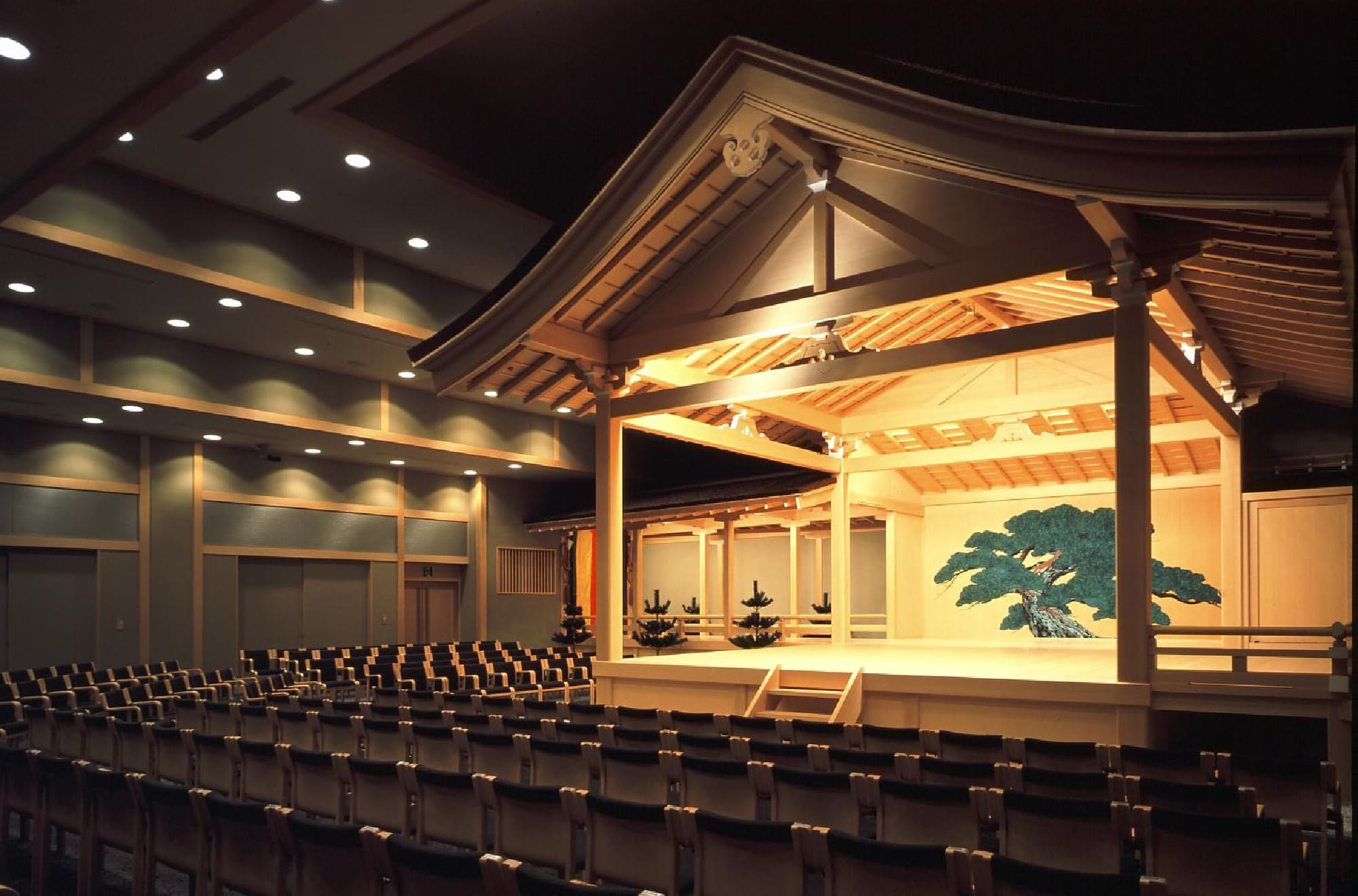
Three structural features set Tokyo apart from comparable Asian conference cities.
First, the depth of mid-scale premium venues is unusually wide. Most Asian cities concentrate corporate hosting capacity in 3–5 flagship convention centers and 10–15 hotel ballrooms. Tokyo has those, plus a much deeper second tier: regional cultural halls, architectural landmarks, museums available for private hire, historical halls, traditional buildings, restaurants with private event capacity, and creative-conversion spaces. The 200–800 attendee range, in particular, offers an unusually deep selection compared with many other Asian capitals.
Second, the city’s distinctive non-hotel venues are operationally accessible to corporate events—if you know how to reach them. Heritage venues, museums, traditional buildings, and “unique venues” managed by Tokyo Metropolitan Government’s Unique Venues programme can host private corporate events, but their booking processes typically run in Japanese, require relationships with venue operators, and apply restrictions (sound, food service, decoration) that are rarely documented in English-facing materials.
Third, venue rates are not what they appear to be on the booking sheet. Japanese venues quote a base rental rate; the realistic total cost includes mandatory in-house catering minimums, AV equipment fees that are often higher than equivalent international venues, service charges (typically 10–15%), and consumption tax (10%). The base rate is rarely the deciding number.
How to Read This Guide
We have organized venues by category and use-case rather than by an arbitrary 1–10 ranking. Rankings drift year to year and create the wrong selection logic: planners optimize for “the top venue” instead of “the venue that fits this event.”
For each category, we indicate:
- Best for: the event format the category serves most effectively
- Capacity range: realistic attendee numbers, not theoretical maximums
- Cost tier: comparative across Tokyo venues (Lower / Mid / Higher / Premium)
- Production complexity: how much pre-event planning the category demands
- Lead time: practical booking window for venue selection through to event date
Category 1: Hotel Ballrooms — The Reliable Premium Standard
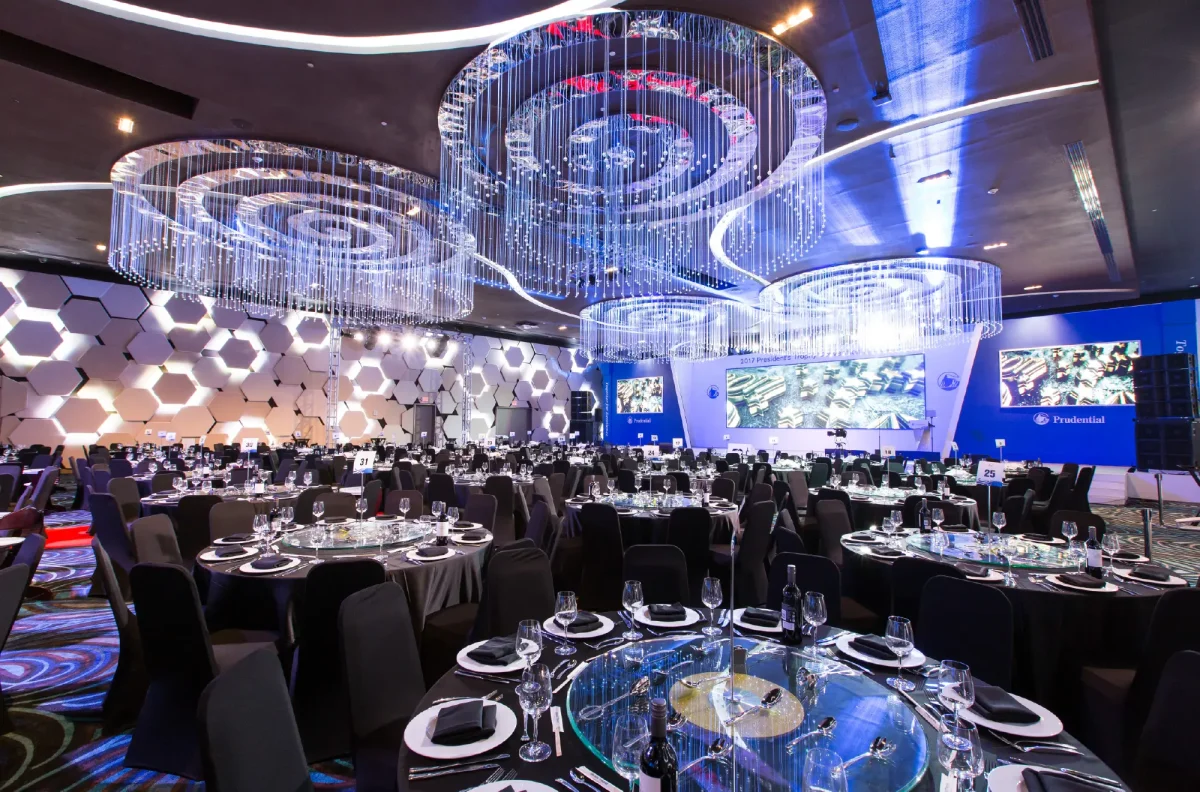
Hotel ballrooms are the default starting point for most international planners, and for good reason. The ballrooms at Tokyo’s top hotels are operationally consistent, equipped for global-standard production, and integrated with on-site accommodation, F&B, and concierge services that simplify VIP and overseas attendee logistics.
Representative venues at this tier
- The Okura Tokyo — Heian-no-Ma is among Tokyo’s largest hotel banquet halls (1,968 m², capacity up to ~2,300, 7.5 m ceiling). Strong choice for large awards ceremonies, milestone anniversaries, and high-end conferences.
- Grand Hyatt Tokyo (Roppongi) — The Grand Ballroom East and West (500 m² each, 6.6 m ceilings, combinable into a 1,000 m² space) deliver flexibility for events that need both a main hall and break-out configurations under one roof.
- Cerulean Tower Tokyu Hotel (Shibuya) — Ballroom with 7.2 m ceiling, divisible into four spaces, with capacity up to 700 banquet-style or 1,400 theatre-style. The Shibuya location is well-suited to events targeting creative and tech-industry audiences.
- Four Seasons Hotel Tokyo at Otemachi — Naturally lit Grand Ballroom and adjacent function rooms on a single floor, adjacent to the Imperial Palace. The location signals seniority and discretion; well-suited to executive forums and luxury brand events.
- Shangri-La Tokyo (Marunouchi) — Ballroom for up to ~300 guests with integrated immersive projection mapping and dynamic lighting. Strong for product launches and brand events where on-site production technology is part of the experience design.
Other premium-tier ballrooms regularly used for corporate events include The Peninsula Tokyo, The Ritz-Carlton Tokyo, Mandarin Oriental Tokyo, Palace Hotel Tokyo, Conrad Tokyo, Hotel New Otani Tokyo, Imperial Hotel Tokyo, and The Prince Park Tower Tokyo. Each has a distinct character; the right choice depends less on hotel star-rating than on the brand fit between the venue’s signature aesthetic and the event’s narrative.
Best for
Awards ceremonies, milestone anniversary events, large-scale formal dinners, branded conferences with VIP overnight requirements, and product launches that benefit from integrated hospitality.
Capacity / Cost / Lead Time
- Capacity range: 100–2,300 (single ballroom)
- Cost tier: Higher to Premium
- Production complexity: Moderate (in-house F&B and AV reduce vendor count, but constrain customization)
- Lead time: 4–9 months; flagship hotels for peak dates (April cherry-blossom season, November–December year-end season) book 12+ months ahead
Category 2: Convention Centers and Exhibition Halls — Scale Without Compromise
For events that exceed hotel ballroom capacity or require exhibition footprint adjacent to conference programming, Tokyo’s convention infrastructure is among the strongest in Asia.
Representative venues at this tier
- Tokyo Big Sight (Ariake) — Japan’s largest exhibition complex (95,000+ m² of exhibition halls plus conference rooms). Standard host for major international exhibitions, large trade shows, and conferences requiring 5,000+ attendee capacity. East and West halls can be configured independently or combined.
- Makuhari Messe (Chiba, ~40 minutes from central Tokyo) — 75,000+ m² combined exhibition and conference space. Frequently chosen as a Tokyo Big Sight alternative when dates conflict or when exhibitor logistics favor Chiba’s road and rail access.
- Tokyo International Forum (Yurakucho) — Architectural landmark housing Hall A (~5,000 seats), Hall B, Hall C, Hall D, and dozens of smaller rooms. The Hall A configuration is one of Asia’s signature large-scale conference venues.
- Pacifico Yokohama (Yokohama, ~20 minutes south of Tokyo by train) — Major convention complex frequently used for medical, scientific, and tech conferences. National Convention Hall seats ~5,000; combined with Pacifico Yokohama North for exhibition capacity.
- Tokyo International Exchange Center (Odaiba) / Tokyo Bay Area complexes — Mid-scale convention facilities increasingly used for tech, content, and creative industry conferences.
Best for
International conferences (1,000–10,000+ attendees), large trade shows and exhibitions, association meetings, multi-track conferences requiring extensive break-out space, and any event combining exhibition and conference programming.
Capacity / Cost / Lead Time
- Capacity range: 1,000–30,000+
- Cost tier: Mid to Higher (base venue rates are competitive; total cost rises with exhibition build-out)
- Production complexity: High (multi-vendor coordination required; exhibition stand fabrication, multiple food zones, registration logistics, security)
- Lead time: 12–24 months for peak-season dates; 6–9 months for off-peak
Category 3: Architectural Landmark Venues — When the Building Tells the Story
A second tier of Tokyo venues earns its place on shortlists not for capacity or convention infrastructure, but because the building itself is part of the event experience. These venues photograph beautifully, signal sophistication, and provide a backdrop that an exhibition hall cannot.
Representative venues at this tier
- Tokyo Midtown Hall & Conference (Roppongi) and Tokyo Midtown Yaesu Conference (Yaesu, opened 2023) — Modern, design-led conference venues integrated into mixed-use development complexes. Tokyo Midtown Yaesu, in particular, has become a preferred venue for international hybrid forums—the Asahi World Forum 2024 we produced was held here, with ~1,300 in-person attendees served by a hybrid production design.
- The National Art Center, Tokyo (Roppongi) — private hire on select dates — Architectural landmark by Kisho Kurokawa, with select event hire access for high-profile cultural and brand events.
- Mori Building venues (Roppongi Hills, Toranomon Hills, Azabudai Hills) — Multiple mid- and large-scale event spaces integrated into Mori Building developments, including the recently opened Azabudai Hills complex (2023).
- Marunouchi Building / Shin-Marunouchi Building event halls (Tokyo Station area) — Mid-scale halls adjacent to Tokyo Station, with high accessibility for events drawing attendees from across the Kanto region.
- GINZA SIX, Yebisu Garden Place, Roppongi Hills Arena — Mixed retail-commercial complex event spaces, well-suited to product launches and brand-experience events that benefit from foot traffic and adjacent media coverage.
Best for
Mid-scale conferences (300–2,000 attendees) where venue architecture is part of the brand statement, hybrid forums, brand-experience events, design and creative industry conferences, executive forums.
Capacity / Cost / Lead Time
- Capacity range: 200–3,000
- Cost tier: Higher to Premium
- Production complexity: Moderate to High (some venues impose meaningful restrictions on rigging, lighting, and sound; verify case-by-case)
- Lead time: 6–12 months; iconic landmarks for high-profile dates require earlier engagement
Category 4: Heritage and Cultural Venues — Tokyo’s Hidden Inventory
This is the category most international planners do not see from outside Japan, and the category where a capable local production partner most visibly changes the venue equation.
Tokyo’s heritage venue inventory includes traditional buildings registered as Important Cultural Properties, historical halls and gardens, select temples and shrines that accept private corporate hosting, and traditional Japanese-style restaurants (ryōtei) that operate as private event venues.
Representative venues at this tier
- Hotel Gajoen Tokyo (Meguro) — A Tokyo cultural landmark combining traditional Japanese aesthetics with luxury banquet capacity. Several ballrooms and traditional rooms; signature choice for events that want a strong Japanese cultural footprint without leaving central Tokyo.
- Happo-en (Shirokanedai) — Traditional Japanese garden estate with multiple banquet halls overlooking landscaped grounds. Long-standing venue for weddings and corporate events seeking a distinctly Japanese atmosphere.
- The Tokyo Station Hotel — Sakura Room and traditional halls — Historical venue inside the iconic Marunouchi Station Building (registered as an Important Cultural Property).
- Akasaka Prince Classic House (Kioicho) — Historical residence registered as an Important Cultural Property, available for select event hire.
- Select temples, shrines, museums, and traditional buildings — by negotiated arrangement — Tokyo Metropolitan Government’s Unique Venues programme curates a selection; many additional venues operate outside the programme and are accessible only through local relationships.
For deep heritage and cultural-venue programming—particularly involving temples, shrines, and historical sites—our specialized inbound brand DRAGON EVENTS maintains the deepest concentration of these relationships in our team. See DRAGON EVENTS for the full portfolio.
Best for
Luxury brand events, milestone anniversaries with cultural emphasis, VIP-only programs, executive forums where the venue itself signals seniority, and any event where attendee photos and post-event media coverage are weighted heavily as outcomes.
Capacity / Cost / Lead Time
- Capacity range: 50–600 (typically smaller, more intimate scale)
- Cost tier: Higher to Premium (lower base rates than top hotel ballrooms, but layered service and customization costs add up)
- Production complexity: High (heritage venue restrictions on power, rigging, sound, decoration, and catering require careful pre-event negotiation)
Lead time: 6–18 months; the most exclusive venues require relationship-led access rather than standard availability-based booking.
Category 5: Creative and Industrial Conversions — Modern Brand Stages
The most rapidly expanding category in Tokyo’s venue inventory is converted creative-industry spaces: photo studios, gallery spaces, warehouse conversions, film and TV studio spaces, and post-industrial sites adapted for event use. These venues are particularly favored by brands targeting younger creative-class audiences and by product launches that want to escape the formality of hotel ballrooms.
Representative venue types
- Photo studios with event capacity (Tennozu, Aoyama, Daikanyama, Higashi-Shinagawa) — Large white-cube studios available for evening event hire; flexible blank-canvas spaces for highly designed product launches and brand activations.
- Warehouse and industrial conversions (Shibaura, Tennozu, Sumida) — Post-industrial spaces with raw aesthetics; well-suited to fashion, design, and tech-product audiences.
- Galleries and design centers (Aoyama, Omotesando, Roppongi, Daikanyama) — Smaller-scale spaces for boutique launches, VIP receptions, and editorial-style events.
- Cultural and media facility event spaces — TV studio spaces, NHK Hall and adjacent facilities, and select cultural-foundation halls available for private hire.
Best for
Product launches, brand activations, fashion and design industry events, technology and creative-industry conferences, evening reception programming.
Capacity / Cost / Lead Time
- Capacity range: 50–800
- Cost tier: Mid to Higher
- Production complexity: High to Very High (blank-canvas venues require full production build-out: power infrastructure, climate control, AV, lighting, custom furnishing)
- Lead time: 3–9 months
Category 6: Outdoor and Rooftop Venues — Seasonal Differentiation
For specific seasons (typically May, October, and November) Tokyo’s outdoor and rooftop venues offer differentiation that indoor venues cannot match. Outdoor programming requires weather contingency planning, but when conditions align, the resulting events photograph and are exceptionally memorable.
Representative venue types
- Hotel rooftop terraces (Andaz Tokyo, Two Rooms Grill Bar, select properties) — Reception and cocktail-format spaces with city views.
- Garden venues (Happo-en, Hama-rikyu Gardens, Rikugien Garden, Kyu-Furukawa Garden — select events) — Historical Japanese gardens with select event-hire access.
- Outdoor plaza and event spaces (Tokyo Midtown Plaza, Roppongi Hills Arena, Yebisu Garden Place Centre Plaza) — Mid- to large-scale outdoor event spaces integrated with retail and commercial complexes.
- Waterfront venues (Tennozu, Toyosu, Odaiba waterfront) — Reception and event spaces along Tokyo Bay with backdrops suited to evening programming.
Best for
Welcome receptions, cocktail-format networking events, evening programming as part of multi-day conferences, seasonal celebrations.
Capacity / Cost / Lead Time
- Capacity range: 50–500
- Cost tier: Mid to Higher (plus weather contingency budget)
- Production complexity: High (weather contingency, outdoor power, lighting, and climate considerations)
- Lead time: 4–9 months
Venue Selection Framework: Matching Venue to Event Type
The most useful selection logic is to start from the event format and work backwards to the venue category, rather than starting from a “Top 10 Tokyo Venues” list.
| Event format | Primary category | Realistic secondary options |
|---|---|---|
| Large-scale international conference (1,000+) | Convention Center | Architectural Landmark (Tokyo International Forum) |
| Mid-scale corporate conference (300–800) | Architectural Landmark or Hotel Ballroom | Convention Center (Pacifico Yokohama) |
| Awards ceremony (200–800) | Hotel Ballroom | Heritage Venue |
| Milestone anniversary event | Hotel Ballroom or Heritage Venue | Architectural Landmark |
| New product launch (consumer-facing) | Creative Conversion or Architectural Landmark | Heritage Venue (luxury positioning) |
| Executive VIP forum (50–200) | Heritage Venue or Hotel Ballroom (premium tier) | Architectural Landmark |
| Brand activation / experiential | Creative Conversion or Outdoor / Rooftop | Architectural Landmark |
| Hybrid forum with sustainability emphasis | Architectural Landmark | Modern Hotel Ballroom (Shangri-La, Four Seasons Otemachi) |
This is a starting point, not a final answer. The “right” venue inside the category depends on attendee profile, brand fit, season, budget envelope, and the surrounding production design.
For a detailed walkthrough of how venue selection plays out across the full event-planning process, see our companion guide Corporate Event Planning in Japan.
What Quoted Rates Don’t Tell You
Three categories of hidden cost regularly surprise international planners pricing Tokyo venues.
1. Mandatory in-house F&B minimums. Most hotel ballrooms and many landmark venues require catering to be sourced in-house, with per-attendee minimum spend benchmarks. These minimums can equal or exceed the base venue rental—and they are rarely visible on initial inquiry quotes.
2. AV and technical fees. In-house AV systems are typically standard-spec; events requiring custom lighting, multi-camera capture, simultaneous interpretation booth installation, or projection mapping require either upgraded in-house packages or external vendor build-out. Both routes add meaningful cost.
3. Service charge and consumption tax. Japanese venues quote base rates excluding 10–15% service charge and 10% consumption tax. The total cost is typically 20–25% above quoted base rates once these are layered on.
A useful working rule: assume the realistic total venue cost will be 1.5–2× the headline rental quote once mandatory minimums, AV, service charge, and tax are included. The variance depends heavily on which category and tier you choose.
How Local Production Partners Change the Venue Equation
A capable Tokyo-based event production company changes venue selection in three structural ways.
Access to off-market inventory. Most venues that produce the most memorable events are not on English-language booking platforms. They are reached through relationships built over years of producing events in the city. A production partner with depth in Tokyo can present shortlists that include venues you cannot find independently.
Negotiation leverage. Production companies that book multiple events with the same venues year-round operate with different commercial terms than first-time inquirers. Venue rate concessions, catering minimum flexibility, and equipment upgrades that would not be available to a one-off inquiry are sometimes accessible through partner relationships.
Operational compatibility. Venues vary widely in how easily they accommodate complex productions. A production partner with current operational experience at a shortlisted venue can preempt restrictions—rigging limitations, power constraints, load-in windows—that surface only after contract signing.
At GLOBAL PRODUCE, our in-house venue curation is structured around these three principles. For an overview of how we approach venue selection as a service, including the categories described above and several we have not detailed here, see our VENUE page. For a full view of recent events we have produced across the venue inventory, see our WORKS portfolio.
Frequently Asked Questions
Q: We want a “uniquely Japanese” venue but our event has 400 attendees—is that compatible?
A: Yes, with careful selection. Several heritage venues in the 300–600 attendee range deliver strong Japanese cultural atmosphere (Hotel Gajoen Tokyo, Happo-en, select garden venues). Above 600 attendees, the most effective approach is usually a premium hotel ballroom with Japanese cultural elements layered into the production design (kaiseki-inspired catering, traditional craft demonstrations, Japanese-style spatial design) rather than seeking a single heritage venue at that scale.
Q: How early do we need to commit to a venue?
A: For peak-season dates in Tokyo (late March – early April; late October – mid November; mid-December year-end period), 9–12 months ahead is realistic for first-choice venues. For off-peak dates, 4–6 months is usually workable. Heritage venues and the most exclusive architectural landmarks regularly require 12–18 months for first-choice availability.
Q: Can we visit shortlisted venues before signing?
A: Yes, and we strongly recommend it for events above ~200 attendees. A site inspection visit (typically 2–3 days in Tokyo) shows you scale, ceiling height, sightlines, acoustic behavior, and back-of-house flow in ways that floor plans cannot. Site visits also surface restrictions and design constraints early, when they can still be designed around.
Q: Are all Tokyo venues bilingual?
A: At the customer interface (sales contact, account management), most premium hotels and major convention centers offer English-language service. At the operational interface (back-of-house staff, technical crew, vendor coordination, security), Japanese is the working language at virtually all venues. A bilingual production partner absorbs this distinction—your team interacts with the partner in English; the partner handles all Japanese-language venue coordination internally.
Q: How do venue costs in Tokyo compare with Singapore and Seoul?
A: At equivalent quality tier, Tokyo venue base rates are competitive with Singapore and Seoul. Tokyo total costs—after mandatory F&B minimums, AV, service charge, and tax—are at the higher end of the regional range, though favorable foreign-exchange positioning has narrowed the gap in 2024–2026. For deeper city-vs-city analysis, see our Tokyo vs Singapore for Conferences guide.
Q: What about venues outside central Tokyo—Yokohama, Saitama, Chiba?
A: Greater Tokyo also offers several strong venue options outside the city center. Pacifico Yokohama (~20 minutes south) is among Japan’s most credible large-scale conference venues. Makuhari Messe (Chiba, ~40 minutes east) anchors Chiba’s exhibition capacity. Saitama Super Arena hosts large-scale corporate and concert events. For events drawing nationwide attendance, secondary-city venues with strong rail access are often the smarter choice than fighting for central-Tokyo peak-date availability.
Conclusion
Tokyo’s venue inventory rewards planners who treat selection as a category and use-case exercise rather than a “best venues” listing exercise. The most memorable events we produce are almost never held at the most-Googled venues. They are held at the venue that fits the specific event—and that match is usually found by thinking through the format, the audience, and the brand story first, then matching to category, then to specific venue.
If you are evaluating Tokyo venues for an upcoming corporate event and want guided support across the categories described above, our in-house venue curation team is available for a discovery conversation. For events requiring access to heritage, cultural, or otherwise difficult-to-reach venues, our specialized inbound brand DRAGON EVENTS is purpose-built for international planners.
[ Explore GLOBAL PRODUCE Venue Curation → ] [ Discover DRAGON EVENTS → ] [ Contact Us / Get a Quote → ]

SUPERVISED BY

A collective of event production professionals handling the planning, production, and management of over 200 events annually.
From internal gatherings like shareholders' meetings, anniversaries, and award ceremonies to external PR events and exhibitions, we design and deliver optimal communication solutions. Whether in-person, online, or hybrid, we give form to the messages companies wish to convey.